
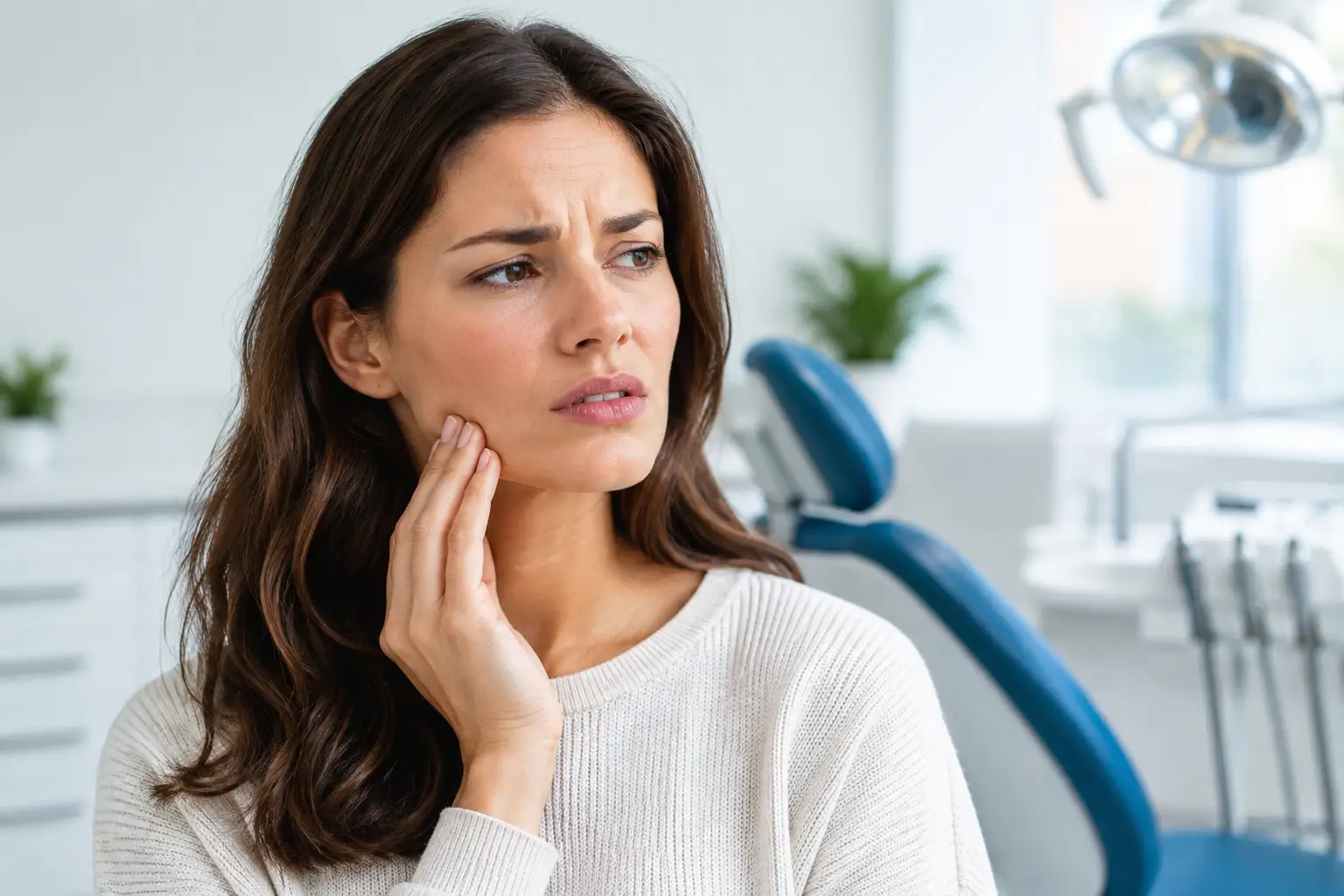
A click, pop, or shifting sensation near your ear can be unsettling, especially when it happens every time you chew, yawn, or speak. If you are asking why jaw clicking is happening, the answer often involves the temporomandibular joints, or TMJs, which connect your lower jaw to your skull. Jaw sounds are common and are not always a sign of serious damage. Still, clicking that is new, painful, persistent, or paired with changes in your bite deserves professional attention.
At Dental Care of Plano, we take concerns like jaw clicking seriously without jumping to conclusions. A comfortable, thorough evaluation can help identify what may be straining your jaw and determine whether conservative care, dental treatment, or a referral is appropriate.
What causes jaw clicking?
Your TMJs are small but hardworking joints. They move in several directions every day as you eat, talk, smile, and yawn. A small cushioning disc sits inside each joint and helps the jaw move smoothly. Clicking can occur when that disc briefly moves out of its usual position and then returns as the mouth opens or closes. This is often called disc displacement with reduction.
That description may sound alarming, but a click alone does not automatically mean you need extensive treatment. Some people have painless clicking for years and maintain normal jaw movement and function. The key question is whether the sound is accompanied by discomfort, limitation, locking, or a change in how your teeth come together.
Jaw clicking may also be linked to muscle tension. The jaw muscles can become overworked from clenching, grinding, chewing gum frequently, biting nails, or holding tension in the face and neck. Stress does not cause every TMJ concern, but it can make clenching and muscle soreness more likely, particularly during sleep or demanding workdays.
Other possible contributors include an uneven bite, missing or shifting teeth, arthritis in the jaw joint, an injury to the face or jaw, or habits that repeatedly force the jaw open wide. Wisdom teeth are not usually the direct cause of jaw clicking, although inflammation, pain, or altered chewing around the back teeth can make an existing jaw issue feel worse.
Why jaw clicking can come and go
Many patients notice that their jaw clicks more during certain weeks and then seems to settle down. That pattern often reflects how much stress the joint and muscles are under at a given time. A stretch of poor sleep, more nighttime grinding, long hours at a computer, or frequent chewing on one side can aggravate symptoms.
The sound may also change depending on what you eat. Tough meat, crusty bread, chewy candy, and large sandwiches require wider opening or more forceful chewing. If your jaw is already irritated, these foods can make clicking more noticeable. That does not mean you must permanently avoid foods you enjoy. It does mean your jaw may benefit from a short period of gentler use while symptoms are active.
A clicking jaw can be painless, mildly annoying, or genuinely disruptive. The trade-off is that waiting and watching may be reasonable for occasional painless clicking, but it is less appropriate when the joint begins to hurt or function differently. Early assessment can often address contributing habits before they become harder to manage.
Signs your jaw clicking needs a dental evaluation
Schedule a dental visit if the clicking lasts more than a few weeks, becomes more frequent, or interferes with normal eating and speaking. You should also be evaluated if you notice jaw soreness, tenderness in front of the ears, recurring headaches, facial muscle fatigue, or pain when biting down.
Changes in your bite are especially worth checking. If your teeth suddenly do not meet the way they used to, or you find yourself shifting your jaw to close comfortably, there may be more than a harmless joint noise involved. A dentist can examine your teeth, gums, bite, jaw movement, and muscles as part of the evaluation.
Seek prompt care if your jaw locks open or closed, you cannot open your mouth normally, or you have significant swelling, fever, severe tooth pain, or pain after an injury. These symptoms may point to a joint problem, dental infection, trauma, or another condition that should not wait. Same-day dental care may be helpful when pain is severe or a dental problem is contributing to the discomfort.
What happens during a jaw and bite evaluation?
A thoughtful visit should begin with your experience, not just the clicking sound. Your dentist may ask when it started, whether it occurs on one or both sides, what makes it worse, and whether you wake with headaches or jaw tightness. Sharing details about recent dental work, injuries, stress, sleep habits, and chewing habits can be helpful.
Next, the dentist may gently check your jaw range of motion, listen and feel for joint sounds, and assess the muscles around your face, jaw, and neck. Your teeth and bite also matter. Worn edges, cracked teeth, loose restorations, or signs of grinding can offer useful clues about the forces affecting your mouth.
X-rays or other imaging are not necessary for every clicking jaw. They may be recommended when there is pain, trauma, suspected arthritis, a change in bite, or concern about a dental condition that cannot be fully assessed during an exam. The goal is to use the right level of care for your symptoms, not to over-treat a sound that is not causing harm.
Gentle ways to reduce jaw strain at home
Until you can be seen, small changes may make your jaw more comfortable. Choose softer foods for a few days if chewing is painful, and take smaller bites rather than opening wide for large foods. Try to avoid gum, hard candy, ice chewing, nail biting, and resting your chin in your hand.
Pay attention to your resting jaw position. Your lips can be together, but your teeth generally should not be touching when you are not chewing. Letting the jaw muscles relax may reduce daytime clenching. A warm compress over sore jaw muscles can feel soothing, and gentle relaxation practices may help if tension is a clear trigger.
Over-the-counter pain relievers may be appropriate for some people, but they are not right for everyone. Follow the package directions and check with your physician or pharmacist if you have medical conditions, take blood thinners, are pregnant, or have questions about medication safety. Avoid forcing the jaw open or trying aggressive exercises found online, since the wrong movement can aggravate an irritated joint.
Treatment depends on the cause
There is no single treatment for every clicking jaw. When teeth grinding or clenching is contributing, a custom dental night guard may help protect teeth and reduce strain during sleep. A custom appliance is designed around your bite, which is different from a one-size-fits-all option purchased at a store.
If an uneven bite, damaged tooth, missing tooth, or failing restoration is affecting how you chew, addressing that dental issue may be part of the solution. In other cases, conservative measures such as habit changes, short-term diet adjustments, physical therapy, or coordination with a TMJ specialist are more appropriate. Surgery is rarely the first step for routine jaw clicking and is generally considered only for specific, persistent joint problems.
The right plan depends on whether the clicking is painless or painful, temporary or progressive, and related to your bite, muscles, joint, or another oral health concern. A careful diagnosis protects you from both extremes: ignoring symptoms that need attention and pursuing treatment that is more aggressive than necessary.
Jaw clicking is your body’s way of telling you to pay attention to how your jaw feels and functions. If the sound is worrying you, affecting meals, or coming with pain, a gentle dental visit can bring clarity and help you move forward with confidence.