
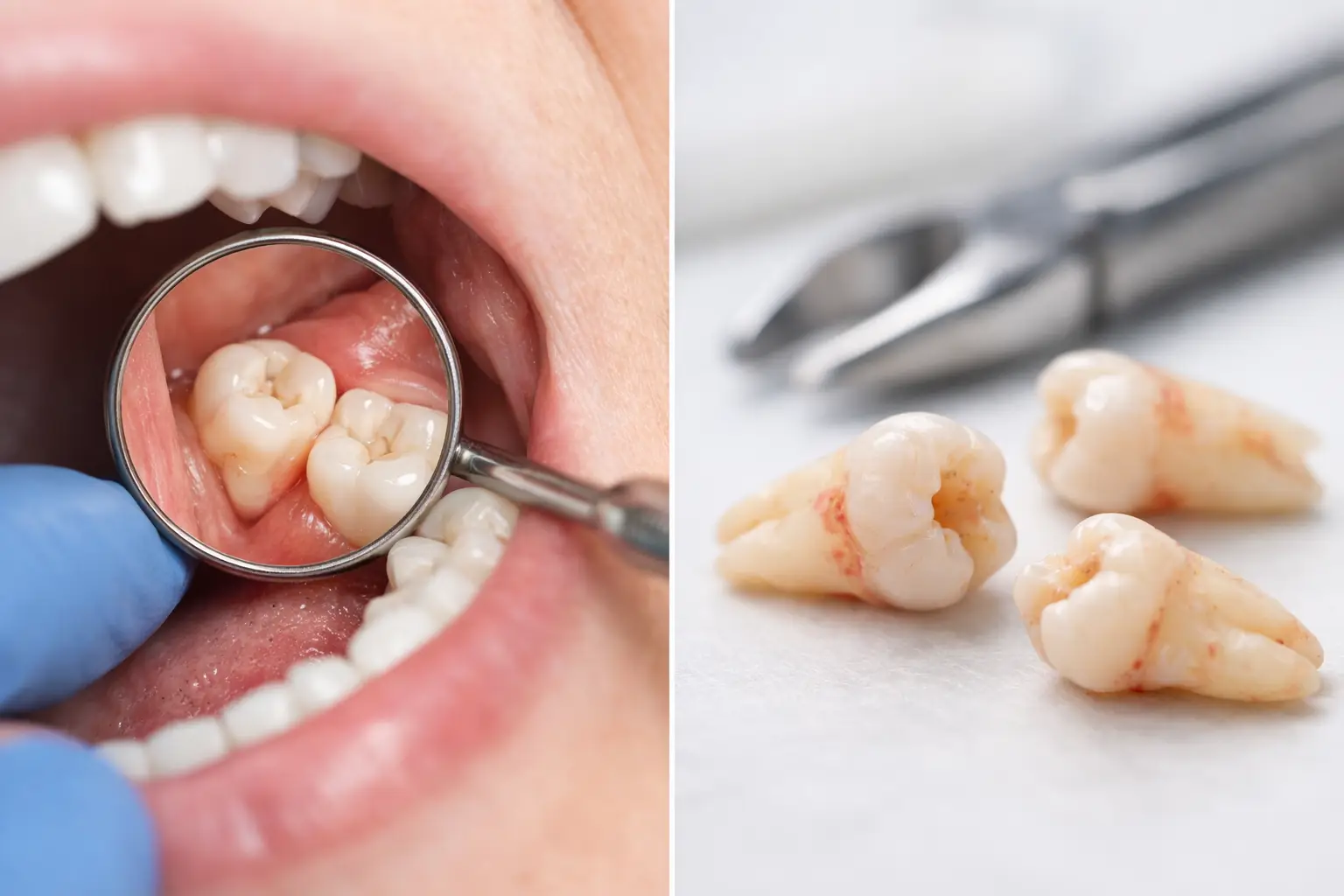
A wisdom tooth can sit quietly for years and then suddenly cause swelling, jaw pain, or food trapping in the very back of your mouth. That is usually when people start asking, when do wisdom teeth need removal? The short answer is not always right away. Some wisdom teeth come in normally and never create a problem. Others become impacted, painful, hard to clean, or risky for the neighboring teeth.
The key is knowing the difference between a tooth that can be safely monitored and one that is more likely to lead to infection, decay, crowding, or damage if you wait too long. For busy families and working adults, that decision matters because timing can affect comfort, recovery, and long-term oral health.
When do wisdom teeth need removal vs monitoring?
Wisdom teeth usually appear in the late teen years or early twenties, although some never fully erupt at all. Removal is often recommended when there is a clear dental reason, not just because the teeth exist. In a conservative, patient-centered practice, the goal is not to remove every wisdom tooth automatically. The goal is to protect your oral health with the least invasive approach that makes sense.
A wisdom tooth may be monitored if it is fully erupted, positioned correctly, easy to clean, and not harming the gums or nearby teeth. In that situation, regular exams and X-rays may be enough. A dentist will watch for changes over time, because a tooth that looks manageable at age 18 may become harder to clean or more problematic later.
Removal becomes more likely when the tooth is trapped under the gums, pushing sideways, partly erupted, repeatedly inflamed, or creating a pocket where bacteria collect. Even if pain comes and goes, the underlying issue usually does not fix itself.
Common signs wisdom teeth need removal
Pain is the symptom most people notice first, but it is not the only one. Some wisdom teeth need removal long before they become severely painful.
Repeated swelling or gum infections
A partially erupted wisdom tooth often leaves a flap of gum tissue over part of the tooth. Food and bacteria can get stuck there, leading to tenderness, swelling, bad breath, or a painful infection. This can happen once, clear up, and then return again. If the problem keeps coming back, extraction is often the more reliable solution.
Impaction under the gums
Impacted wisdom teeth do not have enough room to erupt properly. They may stay buried in the jawbone or grow at an angle toward the tooth next to them. Some impacted teeth cause obvious pain. Others stay silent while still increasing the risk of cysts, gum problems, or damage to surrounding teeth.
Damage to the second molars
One of the biggest concerns is not just the wisdom tooth itself but the tooth in front of it. If a wisdom tooth leans into the second molar, it can create pressure, trap plaque, and contribute to decay or bone loss in an area that is hard to clean and hard to see.
Decay that cannot be predictably managed
Because wisdom teeth sit so far back, brushing and flossing them well can be difficult even for patients with excellent habits. If a wisdom tooth has decay and the area is hard to keep clean, removing it may be more practical than trying to restore a tooth that is likely to keep causing trouble.
Cysts, bone loss, or other changes on X-rays
Some wisdom teeth look quiet on the surface but show concerning changes on dental imaging. A dentist may recommend removal if X-rays show a developing cyst, pressure against nearby structures, or signs that the tooth is affecting the surrounding bone.
When do wisdom teeth need removal if they do not hurt?
This is where things get more nuanced. No pain does not always mean no problem. Some impacted wisdom teeth stay symptom-free for a long time while still causing hidden damage. Others remain stable for years and never require treatment.
That is why a clinical exam and X-rays matter. A dentist is looking at the angle of the tooth, how much room is available, whether the roots are still developing, the condition of the gum tissue, and whether the neighboring molars are at risk. If everything looks healthy and cleanable, monitoring may be reasonable. If the tooth is unlikely to erupt properly or is already threatening nearby teeth, earlier removal may be the safer choice.
For many patients, removing problematic wisdom teeth before they trigger a dental emergency is easier than waiting until there is significant pain or infection. Recovery can also be more predictable when treatment is planned rather than rushed.
The best age for wisdom teeth removal
There is no perfect age for everyone, but many extractions happen in the late teens or early twenties. At that stage, the roots may not be fully formed and the bone is often less dense, which can make removal and healing more straightforward.
That said, adults in their thirties, forties, and beyond can still have wisdom teeth removed safely. The decision depends more on the condition of the tooth, your overall health, and the complexity of the case than on age alone. If a wisdom tooth starts causing repeated infections at 38, it does not become less important just because you are older than the typical extraction age.
The trade-off is that waiting can sometimes allow roots to develop further or complications to build up over time. On the other hand, removing a healthy, functional wisdom tooth with no signs of trouble may not be necessary. This is why personalized evaluation matters.
What your dentist looks for before recommending extraction
A recommendation to remove wisdom teeth should be based on evidence, not a one-size-fits-all rule. During an exam, your dentist will consider how the teeth are positioned, whether there is enough room in the jaw, whether the gums around the area are healthy, and whether the teeth can be cleaned effectively at home.
X-rays help show details that are impossible to judge from symptoms alone. They can reveal impaction, the shape of the roots, and how close the teeth are to nearby nerves or sinuses. That information helps determine both whether removal is a good idea and how complex the procedure may be.
Your symptoms also matter. If you are dealing with jaw soreness, pressure, headaches, bad taste, swelling, or repeated irritation in the back of the mouth, those details help build the full picture. A caring dental team should also talk through comfort options, timing, recovery, and cost so the plan feels manageable, not overwhelming.
What happens if you wait too long?
Sometimes watching and waiting is the right choice. Sometimes it just delays a problem that becomes harder later. Wisdom teeth that remain impacted or partly erupted can lead to repeated infections, cavities in hard-to-reach areas, gum disease, and damage to the tooth next door. In some cases, the symptoms flare up at the worst possible time, like before a trip, during exams, or in the middle of a busy work week.
There is also the comfort factor. Removing a wisdom tooth after several rounds of swelling and infection is often more stressful than addressing it earlier in a controlled setting. For anxious patients, knowing the procedure is planned with gentle care and sedation options can make a big difference.
At Dental Care of Plano, that kind of planning matters. Many patients are balancing work, school, parenting, and budgets, so clear recommendations and flexible scheduling help make treatment feel realistic.
When to schedule an evaluation
If you have pain, swelling, trouble chewing in the back of your mouth, or repeated gum irritation around a wisdom tooth, it is time to schedule an exam. You should also come in if another dentist has told you to monitor your wisdom teeth and it has been a while since your last X-ray. Even without symptoms, teenagers and young adults benefit from having wisdom teeth checked before problems become urgent.
The right next step is not always extraction. Sometimes the best answer is continued monitoring with periodic imaging. Sometimes it is removing one wisdom tooth instead of all four. Sometimes all four should come out because the pattern is clear. Good care starts with an honest evaluation and a treatment plan that fits your health, comfort level, and schedule.
If you are wondering whether your wisdom teeth are something to watch or something to treat, trust the signs your mouth is giving you and get them checked before a small problem turns into a painful one.