
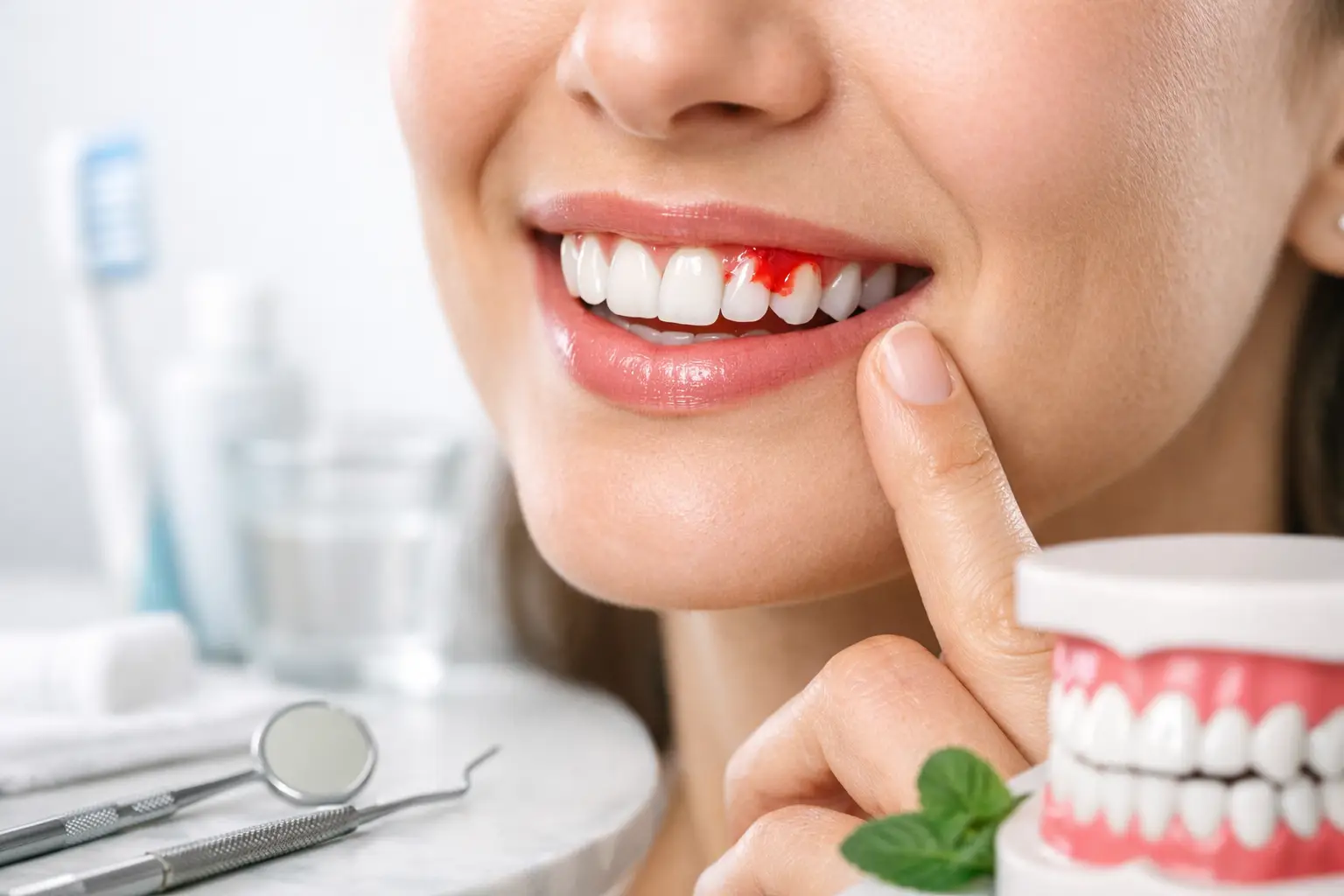
Seeing pink in the sink after brushing can be unsettling, but bleeding gums are not something to brush off. Learning how to treat bleeding gums starts with understanding the likely cause and giving your gums consistent, gentle care. In many cases, bleeding improves when plaque is removed more effectively. In others, it is an early warning sign that professional periodontal treatment is needed.
Healthy gums should generally not bleed during regular brushing or flossing. If yours do, the good news is that prompt attention can often stop the problem before it becomes more serious.
Why gums bleed in the first place
The most common cause of bleeding gums is gingivitis, the earliest stage of gum disease. Plaque is a sticky film of bacteria that forms on teeth throughout the day. When it remains at the gumline, it irritates the tissue. Gums may become red, puffy, tender, or prone to bleeding when you brush or floss.
Plaque that is not removed can harden into tartar, also called calculus. Once tartar has formed, a toothbrush cannot remove it. It can continue to hold bacteria along and below the gumline, allowing inflammation to persist until a dental professional removes it.
A new flossing routine can also cause temporary bleeding. If you have not flossed regularly, the gums between your teeth may be inflamed and bleed at first. That does not mean you should stop. With gentle daily flossing, mild bleeding caused by plaque-related inflammation often improves within one to two weeks.
Other factors can contribute. Brushing too aggressively, using a hard-bristled brush, hormonal changes, smoking or vaping, poorly fitting dental appliances, dry mouth, certain medications, diabetes, and nutritional deficiencies can all affect gum health. The cause matters because the right treatment is not always the same for every patient.
How to treat bleeding gums at home
Start with a careful, consistent routine rather than trying to scrub the bleeding away. Choose a soft-bristled toothbrush and brush twice daily for two full minutes. Aim the bristles gently toward the gumline and use small circular motions. Firm pressure does not clean better, and it can make sensitive gum tissue bleed more.
Clean between your teeth once a day. Traditional floss works well when used correctly: guide it gently between teeth, curve it around one tooth in a C-shape, and slide it up and down before repeating on the neighboring tooth. If floss is difficult to manage, an interdental brush or water flosser may be a practical alternative. What matters most is using a tool you can use consistently and thoroughly.
A toothpaste with fluoride helps protect your teeth from decay, while an antimicrobial mouth rinse may be recommended for some people with gum inflammation. Do not rely on mouthwash alone, though. Rinses can support your routine, but they cannot remove the sticky plaque or hardened tartar that causes much of the irritation.
It also helps to replace your toothbrush or electric brush head about every three months, or sooner if the bristles are frayed. Drink water regularly, especially if you experience dry mouth. If you smoke or vape, reducing or stopping can make a meaningful difference for both gum healing and long-term periodontal health.
Avoid home remedies that can irritate tissues or damage enamel, including brushing with abrasive powders or applying harsh substances directly to the gums. Saltwater rinses may feel soothing after minor irritation, but they are not a replacement for cleaning between teeth and receiving needed dental care.
When bleeding gums need a dentist
If bleeding continues for more than one to two weeks despite gentle, daily brushing and flossing, schedule a dental visit. Persistent bleeding often means there is tartar below or near the gumline, or that the inflammation has progressed beyond what home care can resolve.
Make an appointment sooner if bleeding is heavy, happens without brushing, or comes with swelling, bad breath that does not improve, gum recession, pain when chewing, loose teeth, pus, or changes in the way your teeth fit together. These can be signs of more advanced periodontal disease. Gum disease can progress quietly, so the absence of severe pain does not always mean the condition is minor.
You should also mention bleeding gums to your dentist if you are pregnant, have diabetes, take blood thinners, or have recently started a medication that affects bleeding or dry mouth. Do not stop prescribed medication on your own. Your dentist and physician can help determine whether medication, a health condition, or gum disease is contributing.
Sudden, severe bleeding, facial swelling, fever, trouble swallowing, or difficulty breathing deserves urgent medical or dental attention. These symptoms are not typical of simple gingivitis and should not wait for a routine visit.
What professional gum treatment may involve
A dental exam identifies what is happening beneath the surface. Your dentist may measure the space between your teeth and gums, check for tartar buildup and recession, review your medical history, and take X-rays when appropriate. This evaluation helps distinguish mild gingivitis from periodontitis, a more advanced form of gum disease that can damage the bone supporting your teeth.
For mild gingivitis, a professional cleaning may be enough to remove plaque and tartar and give your gums a fresh start. You will also receive guidance on brushing, flossing, and the areas that need extra attention at home.
If gum disease has created deeper pockets around the teeth, treatment may include scaling and root planing. This careful deep-cleaning procedure removes bacteria and tartar from below the gumline and smooths the root surfaces so the gums can heal more effectively. Some patients need periodontal maintenance visits more often than standard cleanings to keep inflammation under control.
The goal is always to use the most conservative treatment that protects your oral health. Addressing gum disease early can help preserve natural teeth, reduce discomfort, and avoid more involved treatment later.
Preventing bleeding from coming back
Once bleeding has improved, keep the routine going. Gum health depends on what happens every day between appointments, as well as the professional cleanings that remove tartar you cannot reach at home. Most people benefit from dental checkups and cleanings every six months, although your dentist may recommend a different schedule based on your gum health, medical history, and risk factors.
Pay attention to small changes. Gums that look pale pink and fit snugly around teeth are generally a reassuring sign. Redness, swelling, tenderness, or a recurring metallic taste are reasons to check your brushing and flossing habits and consider a visit.
For busy Plano families and working adults, early care is often simpler and more affordable than waiting for a small concern to become an urgent problem. Dental Care of Plano provides gentle preventive and periodontal care in a comfortable setting, with appointment options designed to make ongoing care easier to fit into a full schedule.
Your gums support every smile, meal, and conversation you have. If they are bleeding, treat that signal with patience and consistency – and let a dental professional help when the bleeding does not quickly improve.