
Losing a tooth changes more than your smile. It can affect how you eat, how clearly you speak, and how confident you feel in everyday conversations. If you are weighing dentures or implants for missing teeth, the right choice depends on your health, your goals, your timeline, and your budget – not just the treatment itself.
For many patients, this decision comes down to one question: do you want the most stable long-term replacement possible, or do you need a more affordable and faster way to restore your smile now? Both options can be excellent in the right situation. The key is understanding what each one really feels like to live with.
Dentures or implants for missing teeth: what is the difference?
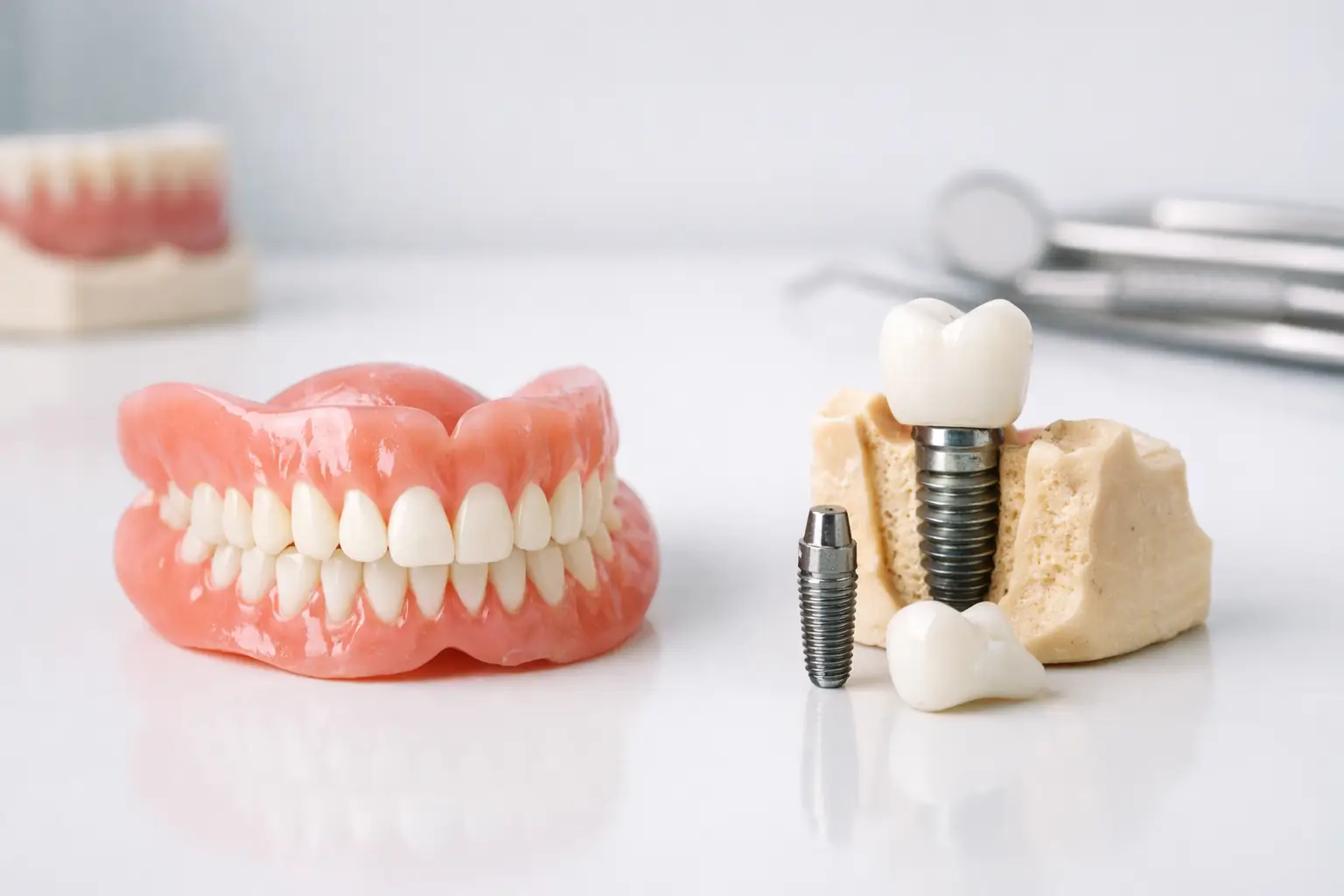
Dentures are removable replacements for missing teeth. They can replace a full arch of teeth or a smaller section, depending on how many teeth are missing. Traditional dentures sit on top of the gums, while partial dentures attach around remaining natural teeth.
Dental implants are small titanium posts placed in the jawbone to act like artificial tooth roots. Once they heal and bond with the bone, they can support a crown, a bridge, or even a full arch of teeth. Unlike dentures, implants are fixed in place and do not come out for cleaning.
That difference matters because it affects comfort, chewing strength, maintenance, and how the jawbone is supported over time. Removable solutions can restore appearance and basic function well. Implants tend to feel more like natural teeth and offer more stability.
When dentures may be the better fit
Dentures are often a practical choice for patients who want to replace several missing teeth without surgery or who need a more budget-friendly solution. They can also be helpful when teeth are being removed and a patient wants to avoid going without teeth during healing.
For someone balancing work, family, and finances, dentures may offer a more accessible path to getting their smile back sooner. Treatment is usually faster than implant treatment, and the upfront cost is typically lower. If a patient has significant bone loss, certain health concerns, or wants to avoid a surgical procedure, dentures may also be the more comfortable choice emotionally and medically.
That said, dentures do come with trade-offs. Because they rest on the gums, they can shift while eating or speaking, especially as the mouth changes over time. Some patients adjust quickly. Others find the movement frustrating, particularly with lower dentures. Adhesives may help, but they do not create the same security as a fixed tooth replacement.
There is also an adjustment period. New dentures can feel bulky at first, and certain foods may need to be reintroduced gradually. A good fit makes a huge difference, and regular adjustments are often part of keeping dentures comfortable.
When implants may be the better fit
Implants are often the best option for patients who want a replacement that looks, feels, and functions as close to a natural tooth as possible. Because the implant is anchored in the jawbone, it offers much greater stability than a removable denture.
This can make everyday life easier. Patients with implants often find it more comfortable to chew firmer foods, laugh freely, and speak without worrying about slipping or clicking. For single missing teeth, an implant can replace the tooth without relying on neighboring teeth for support.
Another major advantage is bone preservation. When a tooth is lost, the jawbone in that area no longer gets the stimulation it needs and can begin to shrink. Implants help reduce that bone loss by functioning like a root. Dentures do not provide that same support, which is one reason facial shape can gradually change after long-term tooth loss.
Still, implants are not automatically the right answer for everyone. They require enough healthy bone for support, or the patient may need bone grafting first. Healing takes time. The cost is higher upfront. And because placement involves oral surgery, some patients prefer a less involved option. Even for people who are good candidates, timing matters. If you need teeth replaced quickly for work or personal reasons, dentures may be the faster route.
Cost matters – and so does long-term value
For many families and working adults, cost is where this decision gets real. Dentures generally cost less at the beginning, which makes them appealing if you need a practical solution now. Implants usually cost more upfront because they involve surgery, custom restoration, and a longer treatment process.
But upfront cost is only part of the picture. Dentures may need relines, adjustments, or replacement over time as the shape of the gums and bone changes. Implants, when properly cared for, can last many years and in many cases much longer than removable options.
That does not mean implants are always the better financial value for every patient. It depends on how many teeth are missing, whether extra procedures are needed, and what matters most to you. Some patients prefer the lower initial investment of dentures. Others want the long-term security of implants and are willing to make that investment over time. A clear treatment plan, insurance review, and financing discussion can help make the decision more manageable.
Comfort, confidence, and daily routine
This is the part many patients care about most, even if they do not say it first. They want to know what their day-to-day life will feel like after treatment.
Dentures can restore appearance beautifully, but they do require a routine. They need to be removed for cleaning, and full dentures are typically taken out at night. If they become loose, they may rub the gums or create sore spots until adjusted.
Implants are closer to caring for natural teeth. You brush, floss, and attend regular dental visits. Because they stay fixed in place, many patients feel more confident eating in public, speaking at work, or smiling in photos. That confidence can be a big factor, especially for people who have already spent time feeling self-conscious about missing teeth.
If dental anxiety is part of the picture, that should be part of the conversation too. Some patients feel more comfortable starting with dentures because the treatment is simpler. Others prefer a permanent solution and feel better knowing sedation and modern technology can make implant care more comfortable than they expected.
Dentures or implants for missing teeth if you have several teeth missing
When multiple teeth are missing, the choice becomes more nuanced. A partial denture may be a solid option if several teeth are gone but healthy teeth remain. For full tooth loss, complete dentures can replace an entire upper or lower arch.
Implants also scale in different ways. You may not need one implant for every missing tooth. In some cases, a few strategically placed implants can support a bridge or secure a full denture. That can give patients a middle ground – more stability than a traditional denture, without the cost of replacing each tooth individually with an implant.
This is where personalized care matters most. The best treatment is not always the most advanced one on paper. It is the one that fits your mouth, your health history, and your life.
How dentists help you decide
A good consultation should not feel rushed or one-size-fits-all. Your dentist should look at your oral health, bone support, gum condition, remaining teeth, bite, and medical history. Just as important, they should ask about your goals. Are you focused on cost? Do you want to avoid surgery? Is stability your top priority? Are you replacing one tooth or many?
At a full-service office, those conversations can be more practical because the team can discuss multiple options in one place. That matters when life is busy and you do not want to bounce between different specialists just to understand your choices. At Dental Care of Plano, that kind of convenience can help patients move forward with less stress and more clarity.
If you are not sure whether dentures or implants are right, that is normal. Many patients come in thinking they already know the answer and change their minds after seeing what is possible. Others arrive worried about cost or discomfort and feel relieved once they understand the options.
The best next step is not guessing. It is getting a clear exam, honest guidance, and a treatment plan built around what works for your health and your life. Missing teeth can make everyday moments harder than they need to be. The right solution should help things feel easier, more comfortable, and more like you again.