
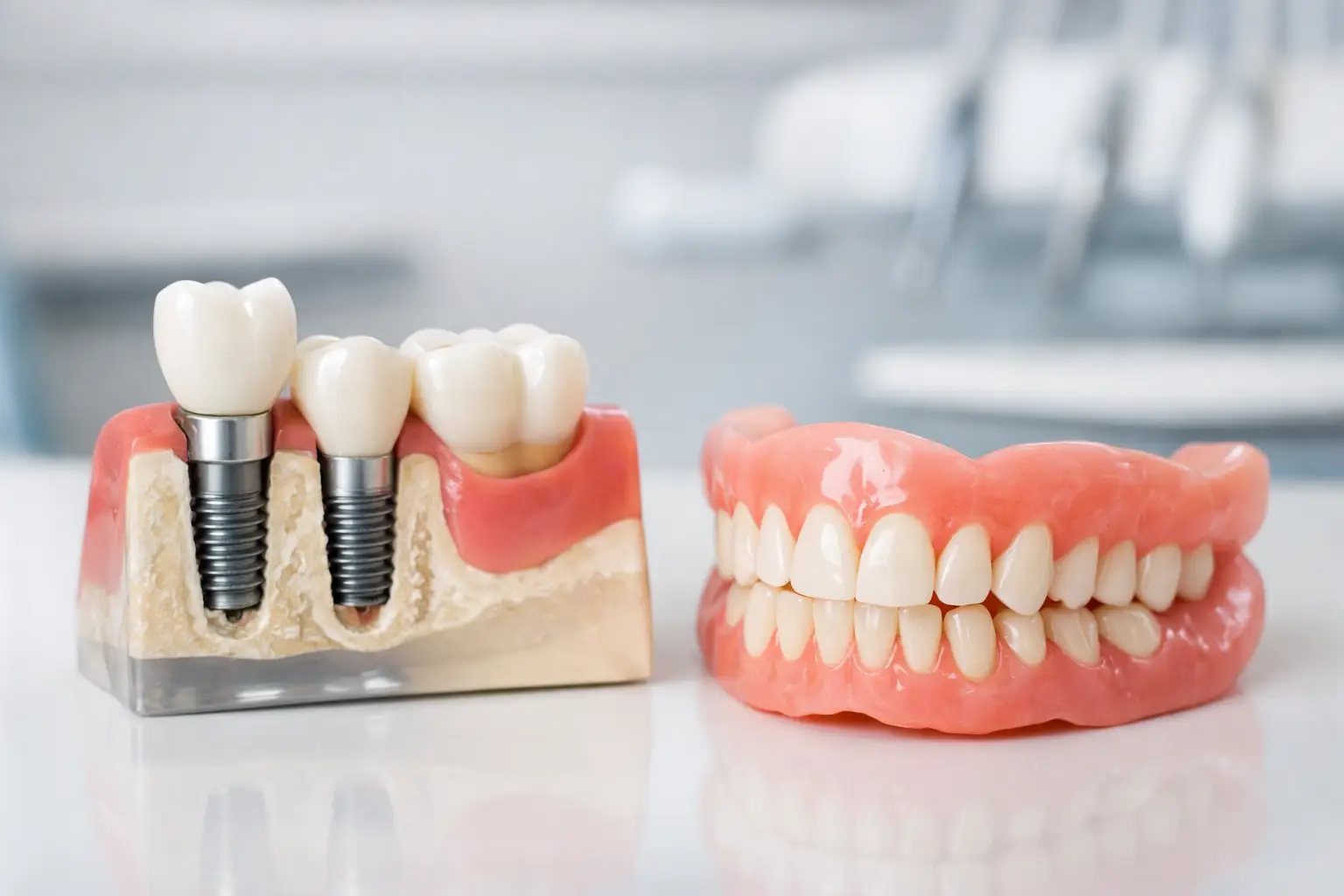
Losing teeth changes more than your smile. It changes how you eat, how clearly you speak, and sometimes how comfortable you feel around other people. If you are weighing dental implants vs dentures, the right choice depends on your health, your goals, your budget, and how you want your teeth to feel day to day.
Both options can restore your smile and improve function. But they do it in very different ways. Dentures are removable and can replace several or all missing teeth without surgery in every case. Dental implants are fixed tooth replacements placed in the jawbone, which gives them a more natural feel for many patients. Neither option is automatically better for everyone.
Dental implants vs dentures: the basic difference
The biggest difference comes down to how the teeth are supported. Dentures sit on top of the gums and are usually removable. Implants are small titanium posts placed in the jawbone, where they act like replacement tooth roots and support crowns, bridges, or implant-supported dentures.
That difference affects almost everything else, including comfort, chewing strength, stability, maintenance, treatment timeline, and cost. Some patients want the most secure, natural-feeling solution possible. Others want a faster and more budget-friendly way to replace missing teeth. Many fall somewhere in between.
When dentures make the most sense
Dentures are often a practical option for patients who need to replace many or all teeth and want a more affordable starting point. They can usually be completed faster than implants, and they may be a good fit for patients who prefer to avoid oral surgery or who are not currently candidates for implant placement.
Modern dentures can look natural and restore facial support after tooth loss. For patients who have struggled with multiple failing teeth, receiving dentures can be a major relief. Eating and speaking may improve, and a well-made denture can create a fuller smile.
That said, dentures do come with trade-offs. Because they rest on the gums, they can move during eating or speaking, especially lower dentures. Some patients notice sore spots, slipping, or a bulky feeling. Adhesives may help, but they do not create the same stability as implants.
Over time, the jawbone can also shrink after teeth are lost. Since traditional dentures do not stimulate the bone the way natural roots or implants do, fit can change and adjustments may be needed.
Pros of dentures
Dentures are usually less expensive upfront, treatment can be faster, and they can replace many teeth at once. They can also be a strong solution for patients who need to restore a smile quickly.
Limits of dentures
Dentures may shift, require periodic relines or replacements, and can make certain foods harder to eat. Some patients adapt very well. Others never fully like the removable feel.
When dental implants make the most sense
Dental implants are often chosen by patients who want a long-term solution that feels more like natural teeth. Because implants anchor into the jawbone, they tend to offer better stability for chewing and speaking. Many patients appreciate that they do not need to remove them at night or rely on adhesive.
Implants can replace a single tooth, several teeth, or support a full arch of replacement teeth. They are versatile, but they also require careful planning. Adequate bone, healthy gums, and overall medical factors all play a role.
One of the biggest advantages of implants is bone support. When a tooth root is lost, the jawbone in that area starts to resorb over time. Implants help stimulate the bone, which can reduce that shrinkage. This matters for both oral health and facial structure.
Patients often describe implants as the closest option to having their natural teeth back. You can bite more confidently, and there is less concern about movement. For working adults and busy parents, that reliability can make a real difference in everyday life.
Pros of implants
Implants are stable, long-lasting, and natural-looking. They can improve chewing power, support bone health, and remove the inconvenience that comes with a removable appliance.
Limits of implants
Implants cost more upfront and usually take longer to complete. They involve surgery, healing time, and in some cases additional procedures such as bone grafting. Not every patient is an immediate candidate.
Dental implants vs dentures for comfort and daily life
This is often the deciding factor. Comfort is not just about pain. It is also about how natural your teeth feel when you talk, laugh, and eat with other people.
Dentures can be comfortable once adjusted properly, but they are still a removable appliance. Some patients need time to adapt to the fit and feel. Foods like steak, apples, or crusty bread may be more difficult. Lower dentures tend to be the most challenging because they have less natural suction.
Implants generally feel more secure because they are anchored in place. Patients often find it easier to eat a wider range of foods and speak without worrying that teeth will move. If your job involves frequent conversation, meetings, or public interaction, that extra confidence may matter more than you expect.
Cost matters, and so does long-term value
For many families and individuals, cost is one of the first concerns. Dentures usually have a lower upfront price, which makes them more accessible in the short term. If you are replacing a full arch of teeth and need a solution soon, dentures may be the easier path financially.
Implants typically require a larger initial investment. However, they may offer more long-term value because they are built for durability and help preserve bone. Traditional dentures may need relining, repair, or replacement over time as the mouth changes.
The right financial choice is not always the lowest starting number. It is the option that fits your needs, your timeline, and what you want your life to look like after treatment. A clear treatment plan, insurance review, and financing discussion can make the decision feel much more manageable.
Maintenance and care
Dentures need daily cleaning and should be removed at night unless your dentist gives other instructions. They also require proper storage and regular exams to check fit and oral tissue health.
Implants need excellent home care too. They are not immune to problems if plaque builds up around them. You still need to brush, floss or use implant-specific cleaning tools, and keep regular dental visits. The difference is that implant-supported restorations are cared for more like natural teeth than like a removable appliance.
Who is a better candidate for each?
Dentures may be the better fit if you want a faster, more affordable option, need to replace many teeth, or have health or bone limitations that make implant surgery less ideal right now.
Implants may be the better fit if you want the most stable and natural-feeling option, have enough healthy bone or are open to grafting, and are comfortable with a longer treatment process.
There is also a middle ground that many patients overlook. Implant-supported dentures combine features of both. They replace a full arch of teeth like dentures, but they attach to implants for added stability. For some patients, this offers a strong balance between function, comfort, and cost.
The best choice is personal, not generic
Online comparisons can be helpful, but they cannot examine your bone levels, gum health, bite, or medical history. They also cannot tell you how much stability matters to you, how quickly you want treatment completed, or what payment range feels realistic for your household.
That is why a one-size-fits-all answer does not work for dental implants vs dentures. A patient missing one tooth has very different needs from someone replacing a full set of teeth. Someone with dental anxiety may prioritize a gentle, step-by-step process. Another patient may want the most fixed solution possible and be willing to invest more time upfront.
At a comprehensive family practice like Dental Care of Plano, those conversations can happen in one place, with options that match both your oral health and your schedule.
What to expect at a consultation
A good consultation should feel informative, not pressured. Your dentist should examine your mouth, take any necessary images, review your health history, and talk through what matters most to you. That includes comfort, appearance, function, timing, and budget.
You should also get honest guidance about trade-offs. If dentures are likely to meet your needs well, that should be said. If implants would give you much better long-term stability, that should be explained clearly too. Good care is not about steering every patient toward the same treatment. It is about recommending what fits.
If you are deciding between dentures and implants, start with the option that helps you move forward instead of staying stuck. The best tooth replacement is the one that restores your health, fits your life, and lets you smile without second-guessing yourself.