
A missing tooth changes more than your smile. It can affect how you chew, how clearly you speak, and even how confident you feel in everyday moments like work meetings, family photos, or going out to dinner. If you are weighing the best ways to replace missing teeth, the right answer depends on where the tooth is missing, how many teeth are involved, your budget, and what feels realistic for your schedule and comfort level.
For some patients, the best choice is a long-term fixed solution that feels close to a natural tooth. For others, a removable option makes more sense because it is more affordable or faster to complete. What matters most is choosing a treatment that protects your oral health now and works well for your life.
Why replacing a missing tooth matters
When a tooth is lost, the gap does not stay neutral for long. Nearby teeth can start to shift, the opposing tooth may move out of position, and the area can become harder to keep clean. Over time, that can lead to bite problems, uneven wear, gum irritation, and more dental work than you expected.
There is also the issue of bone loss. The jawbone needs stimulation from tooth roots to maintain its shape. Once a tooth is gone, the bone in that area can begin to shrink. That is one reason many dentists encourage patients not to wait too long before discussing replacement options.
Just as important, replacing missing teeth can make daily life easier. Patients often notice better chewing, a more balanced bite, clearer speech, and improved confidence.
Best ways to replace missing teeth for long-term function
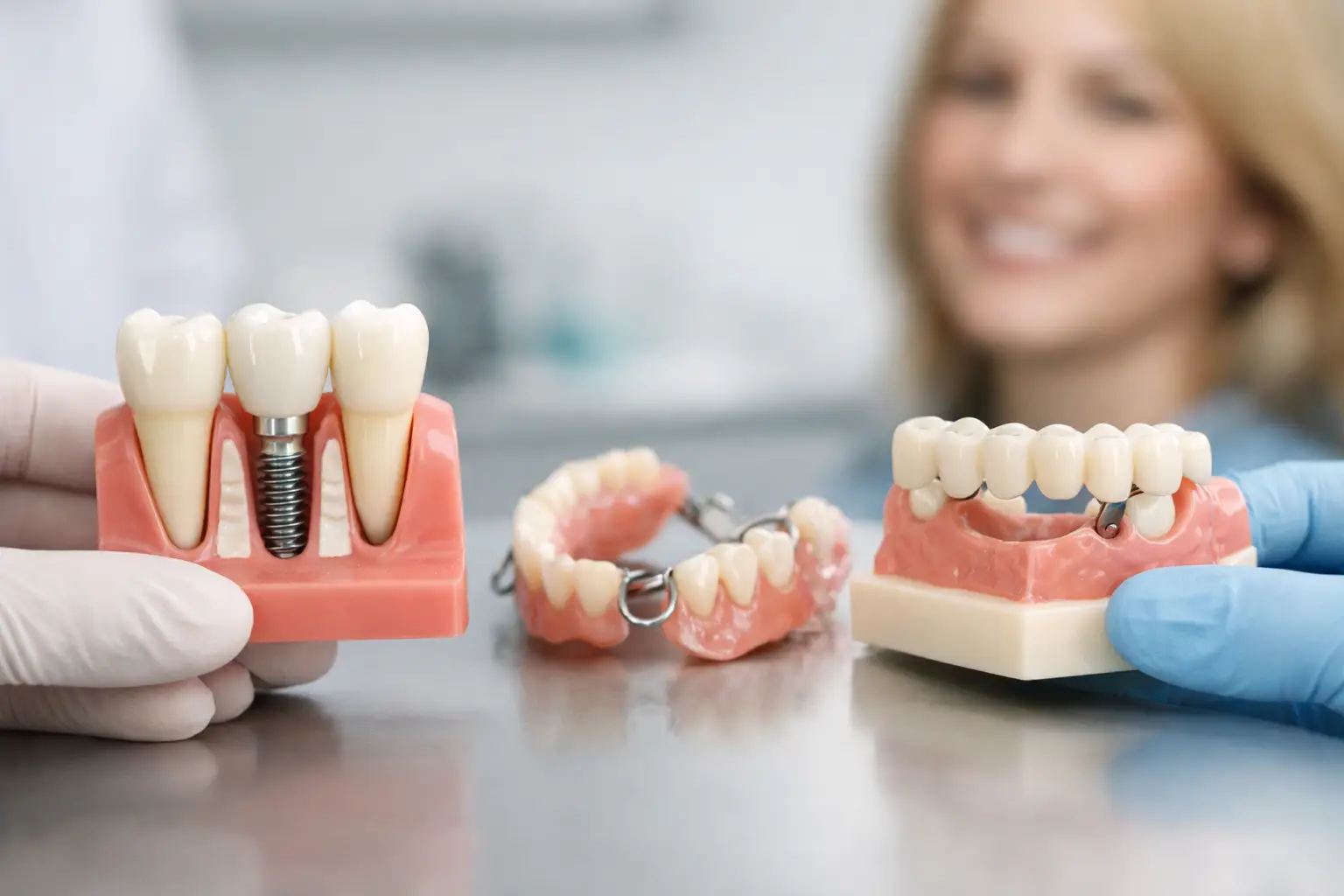
The most common options are dental implants, dental bridges, partial dentures, and full dentures. Each one solves the same basic problem in a different way.
Dental implants
A dental implant is often considered the closest replacement to a natural tooth. It uses a small post placed in the jawbone, topped with a custom restoration such as a crown, bridge, or denture. Because the implant is anchored in bone, it can feel very stable when you eat and speak.
For a single missing tooth, an implant and crown is usually the most independent option because it does not rely on the neighboring teeth for support. That can be a major advantage when the teeth next to the gap are healthy and do not need treatment.
Implants also help preserve bone in the jaw, which is one reason they are often recommended as a long-term solution. Many patients like that they are fixed in place and cared for much like natural teeth.
That said, implants are not always the fastest or least expensive option. Treatment can take several months depending on healing, and some patients need bone grafting before placement. Good overall health, healthy gums, and enough bone support also matter.
Dental bridges
A dental bridge fills the space left by one or more missing teeth by attaching an artificial tooth to the teeth on either side. In many cases, it is a reliable fixed solution that restores appearance and function without surgery.
Bridges can be a very practical choice when the neighboring teeth already need crowns or have large fillings. In that situation, preparing those teeth may fit naturally into the treatment plan. Patients often appreciate that bridges are generally completed faster than implants.
The trade-off is that a traditional bridge depends on adjacent teeth for support. Those teeth usually need to be reshaped, even if they are otherwise healthy. A bridge also does not stimulate the jawbone in the same way an implant does, so bone loss in the missing-tooth area can still occur over time.
Partial dentures
A partial denture is a removable appliance used when several teeth are missing but some natural teeth remain. It can restore chewing ability, improve appearance, and help keep the remaining teeth from shifting.
This option is often more affordable than implants or multiple bridges, which makes it appealing for patients trying to balance treatment needs with a monthly budget. It can also be made relatively quickly, especially when replacing several missing teeth in different parts of the mouth.
The main downside is that partial dentures are removable, so they usually do not feel quite as natural or stable as fixed options. Some patients need time to adjust to how they fit and function. Over the years, changes in the mouth may also mean the appliance needs to be relined, adjusted, or remade.
Full dentures
When all teeth in the upper arch, lower arch, or both are missing, full dentures can restore the smile and support everyday function. Modern dentures can look natural and offer meaningful improvement in quality of life, especially for patients who have been struggling with multiple failing teeth.
Traditional dentures are removable and rest on the gums. They can be a good option when cost is a major factor or when a patient wants a non-surgical solution. Still, lower dentures in particular can sometimes feel less secure because they have less surface area for support.
For patients who want more stability, implant-supported dentures may be worth considering. These use implants to help hold the denture in place, which often improves comfort, chewing power, and confidence.
How to choose the best way to replace missing teeth
The best ways to replace missing teeth are not the same for every patient. A healthy 35-year-old missing one molar may have a very different ideal treatment than a retiree replacing several teeth on a tighter budget.
A few factors usually drive the decision.
The first is how many teeth are missing and where they are located. A single front tooth often calls for a solution that prioritizes appearance as much as function. Missing back teeth may be less visible, but they matter a great deal for chewing and bite support.
The second is the condition of the surrounding teeth and gums. If adjacent teeth are already damaged, a bridge may make more sense than it would otherwise. If gum disease is present, that usually needs to be treated first before moving ahead with long-term restorative care.
The third is budget and timing. Implants may offer excellent long-term value, but not every patient wants surgery or a treatment timeline that unfolds in stages. Dentures and partials can often solve the immediate problem at a lower upfront cost.
Comfort level matters too. Some patients strongly prefer fixed teeth that stay in place. Others are comfortable with a removable option if it helps them restore their smile sooner.
What patients often ask about cost, comfort, and maintenance
Cost is one of the biggest concerns, and understandably so. In general, removable options tend to have a lower upfront price than fixed options, while implants usually involve a higher initial investment. But the cheapest option today is not always the most economical over many years, especially if replacements or repairs are likely.
Comfort depends on fit, design, and your own preferences. A well-made bridge can feel very natural. A partial denture may take an adjustment period. Implant-supported treatment tends to offer the most stability, but it also requires surgery and healing time.
Maintenance is another practical issue. Bridges and implants require excellent brushing, flossing, and regular checkups. Dentures need daily cleaning and periodic evaluation for fit. No option is truly maintenance-free, but the right one should feel manageable for your routine.
When waiting can make treatment harder
Many people put off treatment because life gets busy, the missing tooth is not visible, or they want more time to think through costs. That is understandable. Still, waiting too long can limit your options.
Teeth can drift into the open space. Bone can shrink. Bite problems can get worse. In some cases, what could have been a simpler replacement turns into a more involved treatment plan later.
That does not mean you need to rush into a decision. It does mean it is worth having the conversation early, even if you are not ready to start treatment right away.
At Dental Care of Plano, many patients appreciate having these options explained in one place, with a plan that takes into account health, comfort, budget, and schedule. That kind of conversation can make the process feel much less overwhelming.
If you are missing one tooth or several, there is rarely a one-size-fits-all answer. The right replacement should help you eat comfortably, protect your long-term oral health, and fit your real life – not an idealized version of it. A thoughtful exam and honest discussion can turn a stressful problem into a clear next step.