
A small cavity does not always need a large restoration. But when a tooth is badly cracked, deeply decayed, or weakened by an older repair, choosing between crowns vs fillings can make a meaningful difference in how comfortably that tooth functions years from now. The right option is not about choosing the most extensive treatment. It is about protecting as much healthy tooth structure as possible while giving the tooth the support it truly needs.
At Dental Care of Plano, Dr. Banerjee and our team take a conservative, patient-centered approach. We use a thorough exam and digital imaging when appropriate to understand what is happening beneath the surface, explain your options clearly, and help you make a decision that fits your health, schedule, and budget.
Crowns vs Fillings: The Main Difference
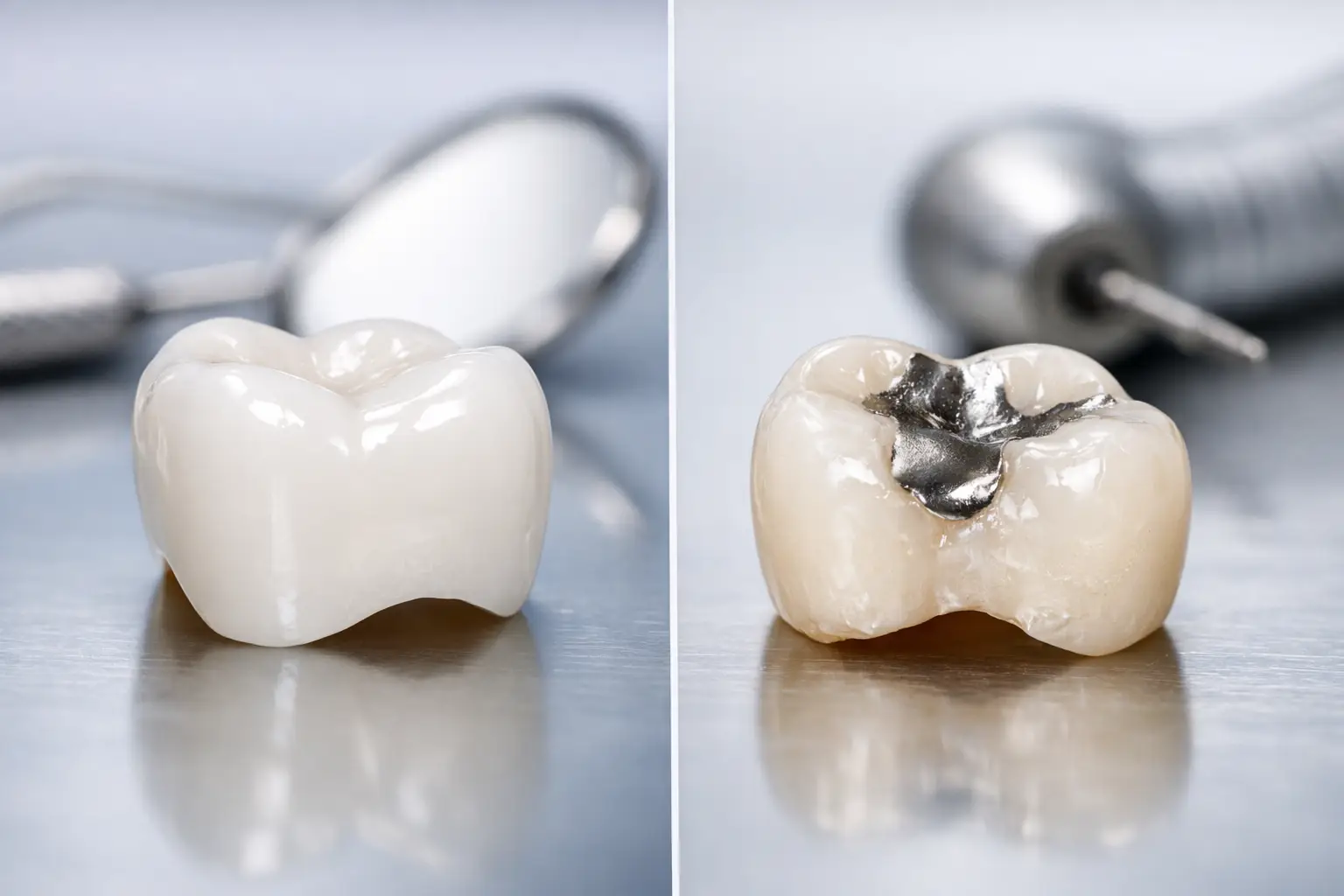
A filling repairs a limited area of damage. After removing decay or old filling material, your dentist places a durable material, often tooth-colored composite resin, directly into the prepared area. The filling bonds to the remaining tooth and restores its shape so you can chew normally.
A dental crown covers the entire visible portion of a tooth above the gumline. It is a custom-made restoration that acts like a protective cap. Crowns may be made from ceramic, porcelain, zirconia, metal, or a combination of materials, depending on the tooth location, bite forces, appearance goals, and clinical needs.
The simple distinction is size and support. A filling replaces missing material inside part of a tooth. A crown surrounds and reinforces a tooth that may no longer be strong enough to hold up with a filling alone.
When a Filling Is Usually the Better Choice
Fillings are often an excellent solution for small to moderate cavities, minor chips, and worn areas of enamel. They are generally more conservative because less healthy tooth structure needs to be shaped or removed. In many cases, they can also be completed in one comfortable visit.
If decay is caught early, a filling may preserve the tooth beautifully. This is one reason routine checkups matter. A cavity that is treated while it is small may need only a modest filling. If it continues to grow, it can undermine more of the tooth and lead to a more complex repair.
A filling can also be appropriate when an old restoration has failed but enough healthy enamel remains. Your dentist will look at the size of the existing filling, the amount of tooth left around it, and whether there are signs of cracking before recommending replacement.
Still, a filling is not automatically the best choice just because it is the smaller treatment. Large fillings can leave thin tooth walls vulnerable to fracture, especially on back teeth that absorb heavy chewing pressure.
Signs a tooth may be suitable for a filling
A filling is commonly considered when the damage is limited, the tooth is structurally sound, and there is no major crack extending through the tooth. You may have no symptoms at all, or you may notice mild sensitivity to sweets or cold.
The final decision should always follow an examination. Tooth damage is not always visible in a mirror, and sensitivity alone cannot tell you how deep decay has reached.
When a Crown May Offer Better Protection
A crown is often recommended when a tooth has lost too much of its natural structure to safely support a large filling. This can happen after extensive decay, a large fractured filling, repeated repairs over time, or a significant crack.
Back teeth are common candidates because molars and premolars handle powerful forces every day. A tooth may look mostly intact from the outside but have weakened walls after decay or an old restoration is removed. In that situation, placing another large filling could increase the chance that the remaining tooth fractures later.
Crowns are also frequently used after root canal treatment. A tooth that has needed root canal therapy may be more brittle, particularly in the back of the mouth. A crown can help protect it from breaking during normal chewing. Front teeth may be evaluated differently because they experience different bite forces and have different cosmetic considerations.
A crown may be the more reliable choice if you have pain when biting, a visible crack, a broken cusp, or a tooth that has already required several large fillings. It can restore both function and appearance while helping distribute bite pressure across the tooth.
What the Treatment Process Feels Like
For a filling, the dentist numbs the area, removes decay or damaged material, prepares the tooth, and places the filling. Most patients return to normal activities the same day. It is common to have brief sensitivity afterward, especially to cold, but ongoing or worsening discomfort should be checked.
A traditional crown usually requires two visits. At the first visit, the tooth is numbed and carefully shaped to create room for the crown. Your dentist takes an impression or digital scan and places a temporary crown while the final restoration is made. At the second visit, the permanent crown is checked for fit, color, bite, and comfort before it is secured.
The idea of dental treatment can feel stressful, especially if you have had a difficult experience in the past. Gentle communication, modern technology, and options for comfort can make care much easier. Tell your dental team if you feel anxious, have a strong gag reflex, or need extra help getting comfortable. Those details matter.
How Long Do Crowns and Fillings Last?
Both crowns and fillings can last for many years, but neither is meant to be ignored once it is placed. Their lifespan depends on the restoration material, the size and location of the repair, your bite, oral hygiene habits, diet, and whether you grind or clench your teeth.
A small filling in a low-pressure area may last a long time. A large filling on a molar has a tougher job. Likewise, a well-made crown can provide long-term protection, but it can still develop problems at the edge if bacteria enter around it or if the tooth underneath develops new decay.
Brushing twice daily with fluoride toothpaste, cleaning between teeth every day, and keeping regular dental visits give both restorations their best chance of lasting. If you grind your teeth at night, a custom night guard may help protect crowns, fillings, and natural enamel from excessive force.
Cost, Insurance, and the Value of the Right Repair
Cost is a real part of the decision for many families and working adults. Fillings generally cost less than crowns because they use less material and usually take less time. Crowns involve more preparation, custom laboratory work, and additional appointments, so the investment is typically higher.
However, the lowest initial cost is not always the most affordable path over time. If a large filling repeatedly breaks or the tooth fractures, treatment may become more involved. On the other hand, placing a crown when a conservative filling would work well is not the goal either. Good dentistry balances long-term protection with preserving natural tooth structure.
Coverage varies by PPO plan, including deductibles, waiting periods, annual maximums, and the reason a crown is recommended. Before treatment begins, ask your dental office to review your estimated benefits and discuss available payment or financing options. Clear information helps you plan without surprises.
Do Not Wait for a Cracked or Painful Tooth
Call your dentist promptly if you have a toothache, swelling, a sharp edge, pain when biting, a lost filling, or a broken tooth. Some dental problems can be treated more simply when addressed early. Waiting for pain to become severe may allow decay or a crack to spread deeper into the tooth.
If a filling falls out or a tooth breaks, avoid chewing on that side. Keep the area clean, and save any large broken piece if you can do so safely. Do not place aspirin directly on the gum or tooth, as it can irritate the tissue.
The best restoration is the one that protects your tooth without doing more than necessary. Whether that means a small filling or the added strength of a crown, a timely exam can replace uncertainty with a clear, comfortable plan for your smile.