
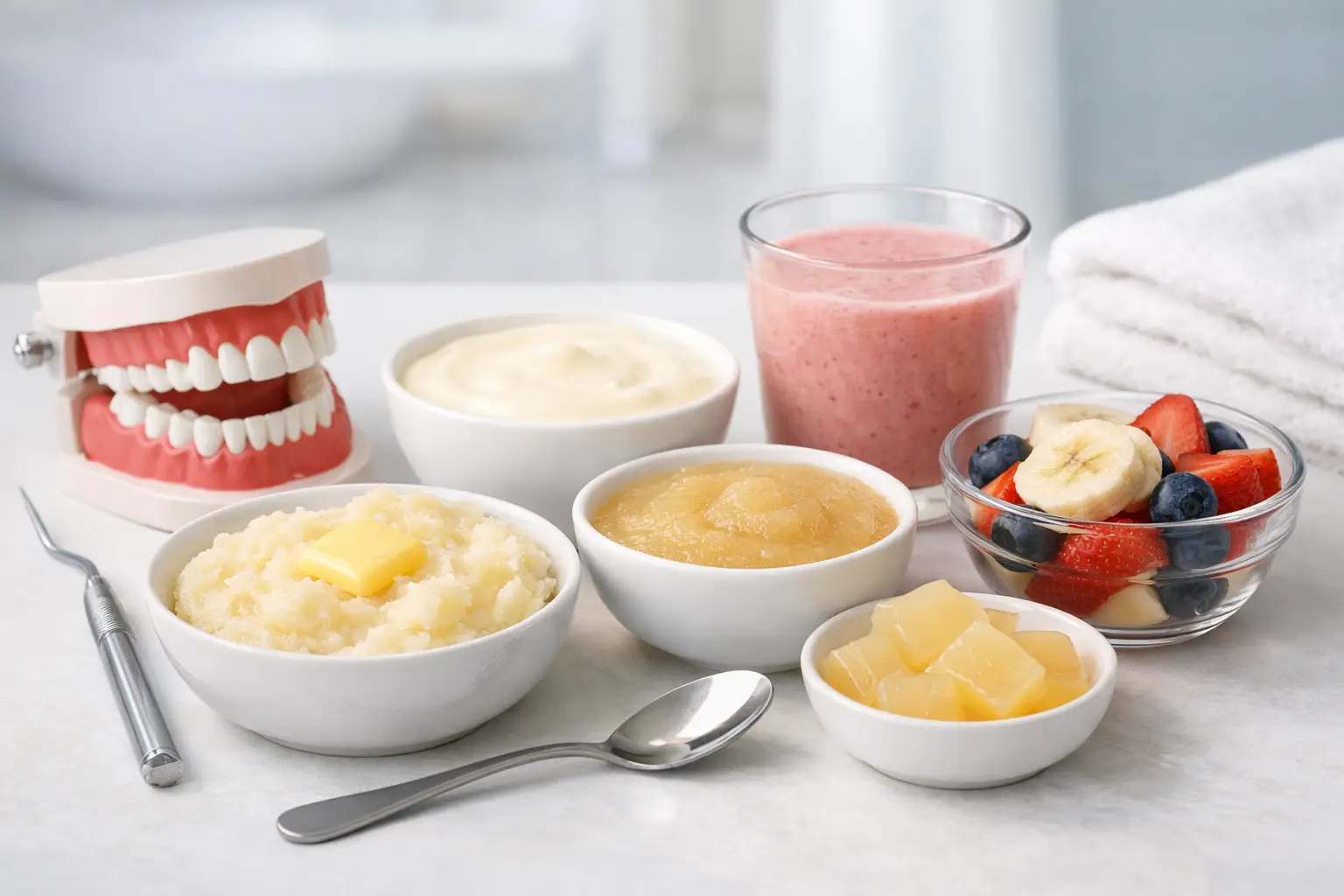
The first few meals after an extraction can feel surprisingly stressful. Your mouth is tender, you may be numb, and the blood clot in the extraction site needs protection while it begins the healing process. Choosing the best foods after tooth extraction helps you stay nourished without putting unnecessary pressure on the area.
The goal is not to eat as little as possible. Your body needs fluids, protein, vitamins, and calories to recover well. The key is choosing foods that are soft, cool or lukewarm, and easy to swallow, then gradually returning to more textured meals as your dentist advises.
Why Food Choices Matter After an Extraction
After a tooth is removed, a blood clot forms in the empty socket. This clot is an essential part of healing because it protects the underlying bone and nerve endings. Crunchy foods, hard chewing, vigorous rinsing, or suction from a straw can disturb it.
If the clot comes loose too early, a painful condition called dry socket can develop. While food is not the only factor, avoiding irritating textures and eating carefully gives the extraction site a better chance to heal comfortably. This is especially important after wisdom teeth removal or a surgical extraction, when swelling and tenderness may last longer.
For the first day, let numbness completely wear off before eating anything hot. A numb cheek, tongue, or lip is easy to bite by accident. Start slowly, take small spoonfuls, and chew on the opposite side of your mouth whenever possible.
The Best Foods After Tooth Extraction for the First 24 Hours
During the first day, think smooth, cool, and gentle. Cool foods may also feel soothing if you have mild swelling. They should not be frozen solid or require forceful biting.
Good choices include applesauce, plain or Greek yogurt without granola or fruit pieces, pudding, gelatin, ice cream without nuts or mix-ins, and smooth mashed potatoes. Blended soups that have cooled to lukewarm are also a good option, as long as they do not contain chunks, seeds, or spicy ingredients.
Protein matters during recovery, so consider a smooth protein shake eaten with a spoon rather than sipped through a straw. You can also blend yogurt, milk or a milk alternative, banana, and protein powder into a smooth meal. Avoid berries with tiny seeds, such as raspberries and blackberries, because seeds can settle near the extraction site.
If you need more filling options, scrambled eggs are often comfortable once the initial numbness has faded. Make them soft and moist rather than browned or crisp at the edges. Cottage cheese can work for some patients, but skip it if the small curds feel difficult to manage near the extraction area.
Soft Foods for Days Two Through Five
By the second or third day, many people can add more variety. Healing does not follow exactly the same schedule for everyone, so use your comfort level and your dentist’s instructions as your guide. Mild soreness is common. Sharp pain that worsens after initial improvement is not something to ignore.
Soft, nourishing foods for this stage include:
- Oatmeal or cream of wheat, cooled to lukewarm
- Mashed sweet potatoes, squash, or avocado
- Soft pasta, macaroni and cheese, or well-cooked noodles
- Flaky fish, such as baked salmon, in small bites
- Soft tofu, refried beans, or well-cooked lentils
- Blended vegetable soups and creamy soups without chunks
You do not have to live on pudding for a week. A bowl of soft pasta with a mild sauce, mashed avocado with scrambled eggs, or a blended soup with added protein can make recovery meals feel more satisfying. For busy Plano families and working adults, preparing a few soft options before an extraction can remove one less concern from the first few days at home.
Keep foods lukewarm. Very hot coffee, soup, or tea can increase bleeding early in recovery and may irritate sensitive tissue. If you normally start your morning with hot coffee, ask your dentist when it is appropriate to resume it and let it cool first.
Foods and Drinks to Avoid While You Heal
Some foods are difficult because they are hard. Others are risky because their small pieces can become trapped around the extraction site. For the first several days, avoid chips, popcorn, nuts, crackers, crusty bread, pretzels, and raw vegetables. Rice, seeds, and grainy foods can also be troublesome if particles collect in the socket.
Skip spicy, acidic, and highly salty foods if they sting or irritate the area. Citrus juices, tomato-based dishes, hot salsa, and heavily seasoned foods may be uncomfortable before the tissue has closed more fully.
Do not use straws unless your dentist specifically says it is safe. The suction can dislodge the blood clot. For the same reason, avoid smoking, vaping, and forceful spitting. Alcohol should also be avoided, particularly if you are taking prescription pain medication or antibiotics.
Carbonated beverages may be uncomfortable for some patients, and sugary drinks do little to support healing. Water is the best everyday choice. Sip gently from a cup and stay well hydrated, especially if you are taking medication that causes dry mouth.
When Can You Eat Normally Again?
There is no single calendar day that applies to every extraction. A simple extraction may allow you to return to many normal foods within about a week, while wisdom tooth removal, multiple extractions, bone grafting, or a surgical procedure can require more time. Your dentist’s post-treatment instructions should always take priority.
As tenderness decreases, begin adding foods with a little more texture. Soft cooked vegetables, tender chicken cut into very small pieces, soft sandwiches without a hard crust, and finely ground meat may be appropriate before crunchy foods are. Continue chewing away from the extraction site until it is no longer sore and your dentist has cleared you to resume normal eating.
Do not test the area with a hard food just because you are tired of soft meals. Biting into a chip, nut, or crusty piece of bread too soon can cause pain and slow your progress. A gradual return is usually easier and safer.
Simple Tips for More Comfortable Meals
Take small bites and chew slowly. If food gets near the extraction site, do not poke it with a toothpick, fingernail, or utensil. Follow your dentist’s instructions for rinsing, which often include a gentle warm saltwater rinse beginning after the first 24 hours. Do not swish aggressively.
Pain medication works best when taken exactly as directed. If your dentist recommends taking it with food, a soft meal like yogurt, mashed potatoes, or eggs can help prevent stomach upset. Be sure to disclose any food allergies, medication concerns, or dietary restrictions before your procedure so your care plan can be adjusted appropriately.
Call your dental office if bleeding does not slow with the instructions you were given, swelling becomes severe, you develop a fever, or pain becomes worse several days after the extraction. These symptoms do not always mean there is a complication, but prompt guidance can protect your comfort and recovery.
At Dental Care of Plano, we want patients to leave with clear instructions and the reassurance that questions are welcome. A little preparation, gentle foods, and patience can make the days after an extraction feel much more manageable while your smile heals.