
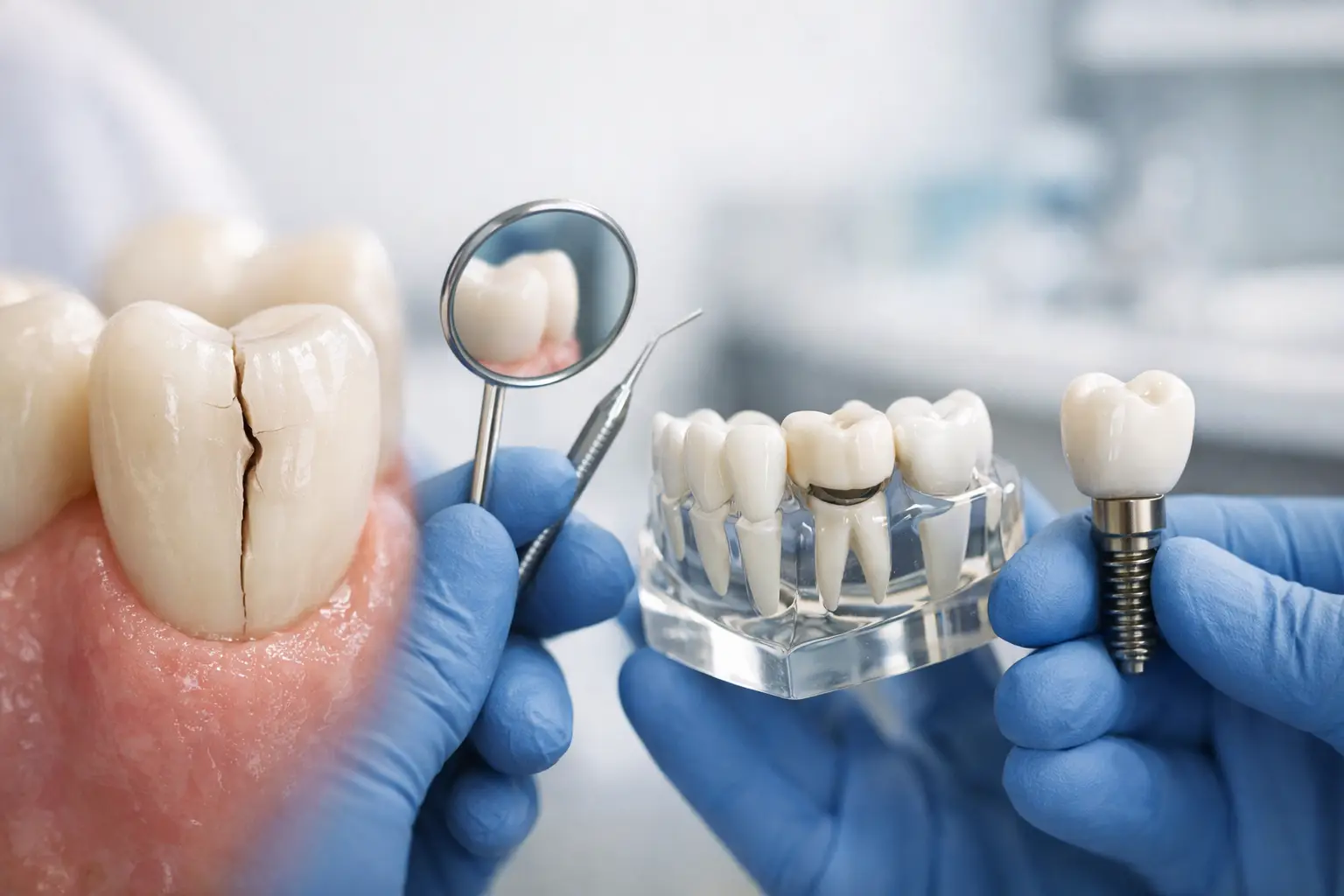
A tooth can crack while biting a popcorn kernel, clenching during a stressful week, or chewing ice on a hot Texas afternoon. Sometimes the pain is sharp and immediate. Other times, it comes and goes when you chew or drink something cold. Understanding your cracked tooth treatment options early can make the difference between protecting your natural tooth and facing a more complex repair later.
A cracked tooth is not something to wait out, even if the discomfort settles down. Cracks do not heal on their own, and chewing pressure can allow them to deepen over time. The good news is that modern dentistry offers several conservative ways to stabilize and restore a damaged tooth, often in one comfortable, familiar setting.
How a Dentist Determines the Right Treatment
Not every crack needs the same treatment. A small surface line in enamel is very different from a fracture that reaches the nerve or extends below the gumline. Your dentist will evaluate where the crack is located, how deep it goes, whether the tooth is painful, and whether the pulp inside the tooth has been affected.
An exam may include gentle bite testing, magnification, digital X-rays, and an assessment of the surrounding gums. X-rays do not always show the crack itself, but they can reveal signs of inflammation, infection, or bone changes near the root. The goal is not simply to cover a crack. It is to stop the tooth from moving, relieve symptoms, and preserve as much healthy structure as possible.
If you have facial swelling, severe pain, fever, or a tooth that has broken significantly, seek prompt dental care. Those signs can mean the problem needs same-day attention.
Cracked Tooth Treatment Options Based on the Damage
Monitoring and preventive protection
Very fine enamel lines, often called craze lines, are common in adult teeth. They may be visible but do not always cause pain or weaken the tooth. In many cases, no restorative treatment is needed. Your dentist may simply monitor the area at regular visits and recommend avoiding habits that place extra stress on teeth, such as chewing ice, biting nails, or using teeth to open packaging.
If grinding or clenching is contributing to the problem, a custom night guard can help protect the tooth from repeated pressure while you sleep. This is a practical option for patients who wake with jaw soreness, headaches, or sensitive teeth.
Dental bonding for small chips and shallow cracks
When a crack or chip affects only a small area of the tooth, composite bonding may be an appropriate conservative choice. The dentist places tooth-colored resin over the damaged area, shapes it to match the tooth, and hardens it with a curing light.
Bonding can restore a smooth edge and improve appearance with minimal removal of natural enamel. It is often a good solution for a visible front-tooth chip. However, bonding may not be strong enough for a deep crack or a heavily used back tooth. It can also stain or wear over time, especially with coffee, tea, tobacco, or grinding.
A dental crown for a weakened tooth
A crown is one of the most common and dependable treatments for a cracked tooth. It fits over the visible portion of the tooth like a protective cap, holding the remaining structure together and spreading chewing forces more evenly.
Crowns are often recommended when a crack causes pain while biting, when a large filling has weakened the tooth, or when part of the tooth has fractured away. Depending on the tooth and your needs, a crown may be made from durable porcelain, ceramic, or another natural-looking material. For many patients, a crown provides the balance of strength, comfort, and appearance needed to keep a natural tooth functioning for years.
The trade-off is that crown treatment requires shaping the tooth to create space for the restoration. When the tooth is structurally compromised, that preparation is often a worthwhile step to prevent the crack from worsening.
Root canal treatment when the nerve is affected
A deeper crack can allow bacteria to reach the pulp, the soft tissue inside the tooth that contains nerves and blood vessels. This may cause lingering sensitivity to hot or cold, throbbing pain, swelling, or tenderness when chewing. In some cases, the tooth may stop hurting even as the nerve becomes damaged, so an exam still matters.
Root canal treatment removes infected or inflamed pulp, cleans the inside of the tooth, and seals it to help prevent reinfection. The tooth is then commonly protected with a crown because it may be more brittle after treatment. While many people feel nervous about root canals, modern techniques and local anesthesia are designed to keep care as comfortable as possible. Treating the infection can relieve pain and help save a tooth that might otherwise be lost.
Extraction and tooth replacement for non-restorable cracks
Some cracks extend too far below the gumline or split the tooth into separate sections. When there is not enough stable tooth structure to support a restoration, extraction may be the healthiest option. This is never the first choice when a tooth can be saved, but removing a non-restorable tooth can stop pain and protect the health of nearby tissues.
After extraction, your dentist can discuss replacement options based on your smile, bite, budget, and long-term goals. A dental implant can replace the tooth root and crown for a stable, natural-feeling solution. A bridge or partial denture may also be appropriate in certain situations. Leaving a missing tooth untreated can allow nearby teeth to shift and may affect chewing, so it is worth having a clear replacement plan.
What to Do Before Your Appointment
If you think you have cracked a tooth, avoid chewing on that side of your mouth. Choose softer foods, and avoid hard candy, nuts, popcorn, ice, and sticky foods that can pull on a loose restoration. Rinse gently with warm water to keep the area clean.
For discomfort, an over-the-counter pain reliever may help when used as directed and when safe for you personally. A cold compress on the outside of the cheek can reduce swelling after an injury. Do not place aspirin directly on the tooth or gums, since it can irritate the tissue.
If a piece of tooth has broken off, save it if you can and bring it to the appointment. Avoid trying to glue it back yourself. Household adhesives are not safe for the mouth and can make professional repair more difficult.
Why Fast Care Matters
Cracked teeth can be unpredictable. A small crack may remain stable for a time, but every bite can place pressure on it. Once bacteria enter the crack or the fracture reaches the root, treatment can become more involved. Getting an evaluation promptly gives your dentist the best chance to recommend a conservative repair rather than waiting until pain or infection forces a larger intervention.
At Dental Care of Plano, Dr. Banerjee and the team take a gentle, patient-centered approach to urgent and restorative care. Whether you need a simple repair, a protective crown, root canal treatment, or a clear plan for replacing a tooth, you can expect an explanation of your choices without pressure. Flexible scheduling, including evenings and Saturdays, can also make it easier to address a dental problem before it interrupts work, family time, or sleep.
Can You Prevent Another Cracked Tooth?
You cannot prevent every accident, but you can reduce common sources of tooth stress. Wear a mouthguard for contact sports, use a custom night guard if you grind your teeth, and do not use your teeth as tools. Regular checkups also help identify worn fillings, bite problems, and early cracks before they become painful.
A cracked tooth can feel alarming, but it does not automatically mean you will lose it. A timely exam gives you answers, comfort, and a treatment plan built around saving your smile whenever possible.