
A severe toothache rarely arrives at a convenient time. It may wake you at night, make hot coffee unbearable, or turn a normal lunch into a careful chew on one side of your mouth. When a tooth is badly decayed, infected, cracked, or injured, the root canal vs extraction decision can feel urgent – and understandably overwhelming.
Both treatments can stop pain and protect your overall health. The right choice depends on whether the tooth can be predictably restored, the extent of infection or damage, your gum and bone health, and the long-term plan for your smile. A caring dentist should never make this feel like a one-size-fits-all decision.
Root Canal vs Extraction: The Core Difference
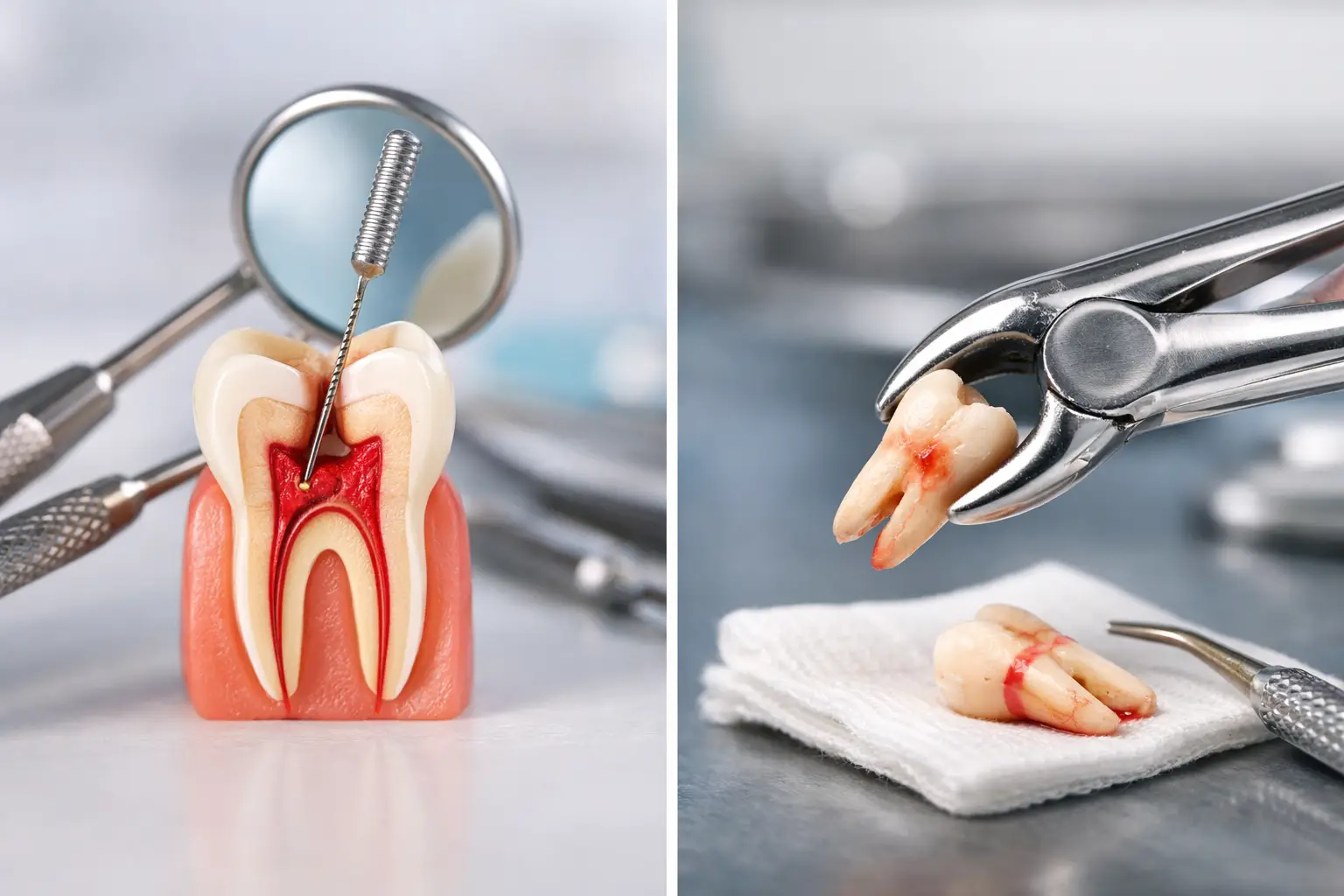
A root canal treats the inside of a natural tooth. When the pulp – the soft tissue containing nerves and blood vessels – becomes inflamed or infected, a dentist removes the damaged tissue, carefully cleans and disinfects the canals inside the roots, and seals the tooth. In many cases, a crown is placed afterward to strengthen and protect it.
An extraction removes the entire tooth, including its roots. Extraction may be recommended when a tooth is too broken down to repair, has a deep crack below the gumline, has severe bone loss, or cannot be restored with a predictable long-term outcome. If the tooth is removed, you and your dentist should also discuss whether to replace it with an implant, bridge, or partial denture.
The goal is not simply to choose the fastest way to end pain. It is to choose a treatment that supports your comfort, function, and oral health for years to come.
When a Root Canal May Be the Better Choice
Whenever possible, preserving a healthy natural tooth is usually beneficial. Your natural teeth help maintain normal chewing, support the shape of your bite, and keep neighboring teeth in their proper positions. A successful root canal allows you to keep that tooth while removing the infection or damaged nerve tissue causing the problem.
A root canal may be appropriate if the tooth has enough healthy structure left to hold a filling or crown, the roots are stable, and the surrounding gum and bone support are in good condition. Deep decay, a large cavity, an abscess, or a tooth that has been injured can all lead to pulp damage without making extraction necessary.
Many patients worry that root canal treatment will be painful. With modern anesthetic techniques and gentle care, the treatment itself is often comparable to receiving a large filling. In fact, the purpose of a root canal is to relieve the pain and pressure caused by an infected or inflamed tooth.
What happens after a root canal?
Some tenderness for a few days is common, especially if the tooth was very inflamed before treatment. Most people can return to their usual routine quickly, though it is wise to avoid chewing hard foods on the treated tooth until it has received its final restoration.
Back teeth, in particular, often need crowns because they absorb significant chewing pressure. Skipping a recommended crown can increase the risk that a treated tooth will crack later. A root canal is not just about clearing an infection – it is also about properly restoring the tooth afterward.
When Extraction Is the Healthier Option
There are times when saving a tooth is not the most conservative choice. If decay reaches far below the gumline, a vertical root fracture is present, or the tooth has lost too much supporting bone from advanced gum disease, a root canal and crown may not offer a reliable result. Repeated treatment on a tooth with a poor prognosis can create more expense, discomfort, and frustration.
Extraction may also be necessary for certain wisdom teeth, severely crowded teeth in orthodontic treatment, or teeth that are damaged beyond repair after trauma. Removing an infected tooth can bring relief, but it should be followed by a thoughtful conversation about healing and replacement options.
Leaving a gap is not always harmless. Nearby teeth can shift toward the open space, the opposing tooth may move out of position, and chewing can become less balanced. Over time, the jawbone in the extraction area can shrink because it no longer receives stimulation from a tooth root.
Replacing a missing tooth
For a visible tooth or a tooth that plays an important role in chewing, replacement is often worth considering. A dental implant replaces the root and supports a crown, making it a highly natural-feeling option for many patients. A bridge uses neighboring teeth to support a replacement tooth, while a partial denture can replace one or several missing teeth.
The best option depends on the location of the tooth, the health of your gums and bone, your overall health, timeline, and budget. Not every extracted tooth needs the same type of replacement. For example, an extraction site may need time to heal before an implant is placed, while some patients are candidates for immediate solutions.
How Cost Fits Into the Decision
It is reasonable to ask about cost early in the conversation. An extraction often has a lower upfront fee than a root canal and crown. However, the initial price does not tell the whole story if you plan to replace the tooth afterward. An implant, bridge, or denture adds to the total investment.
A root canal may cost more at the time of treatment, particularly when a crown is needed, but it can be a sound long-term value when it preserves a restorable tooth. On the other hand, paying to save a tooth with a very guarded prognosis may not be the best use of your resources.
Insurance coverage varies by plan, and benefit limits can affect both choices. Ask for a clear treatment estimate that separates urgent care from future restoration needs. At Dental Care of Plano, patients can discuss PPO insurance and financing options so treatment planning feels more manageable, not rushed.
Questions That Help You Make a Confident Choice
Your dentist should explain what they see on your exam and X-rays in plain language. A few practical questions can make the recommendation easier to understand:
- Is the tooth structurally strong enough to restore after a root canal?
- Is there a crack, and if so, how far does it extend?
- What is the expected long-term outlook for each option?
- Will I need a crown after root canal treatment?
- If the tooth is extracted, what replacement options fit my situation?
- What are the costs, timing, and insurance considerations for the full treatment plan?
The answers matter more than a general rule that root canals are always better or extractions are always cheaper. Your mouth, bite, symptoms, and future goals are individual.
Do Not Ignore Signs of Infection
Throbbing pain, facial swelling, a pimple-like bump on the gums, fever, a bad taste, or sensitivity that lingers after hot or cold foods can signal a dental infection. Sometimes an infected tooth causes very little pain, especially if the nerve has stopped responding. That does not mean the infection has gone away.
Prompt care can prevent a problem from becoming more serious. If swelling affects breathing or swallowing, seek emergency medical attention immediately. For a painful broken tooth, dental swelling, or sudden severe sensitivity, a same-day dental evaluation can help identify whether root canal treatment, extraction, or another approach is needed.
Comfort Matters During Either Treatment
Dental anxiety should not force you to delay care until pain becomes unbearable. Let the dental team know if you have had difficult experiences in the past, feel nervous about needles, or need extra time to understand your options. Gentle anesthetic techniques, a calm environment, and sedation options when appropriate can make treatment far more comfortable.
Whether you choose to save a tooth or remove one, the right plan should leave you feeling informed and supported. A prompt examination gives you the clearest answer – and the best chance to protect your smile before a small problem becomes a more complicated one.