
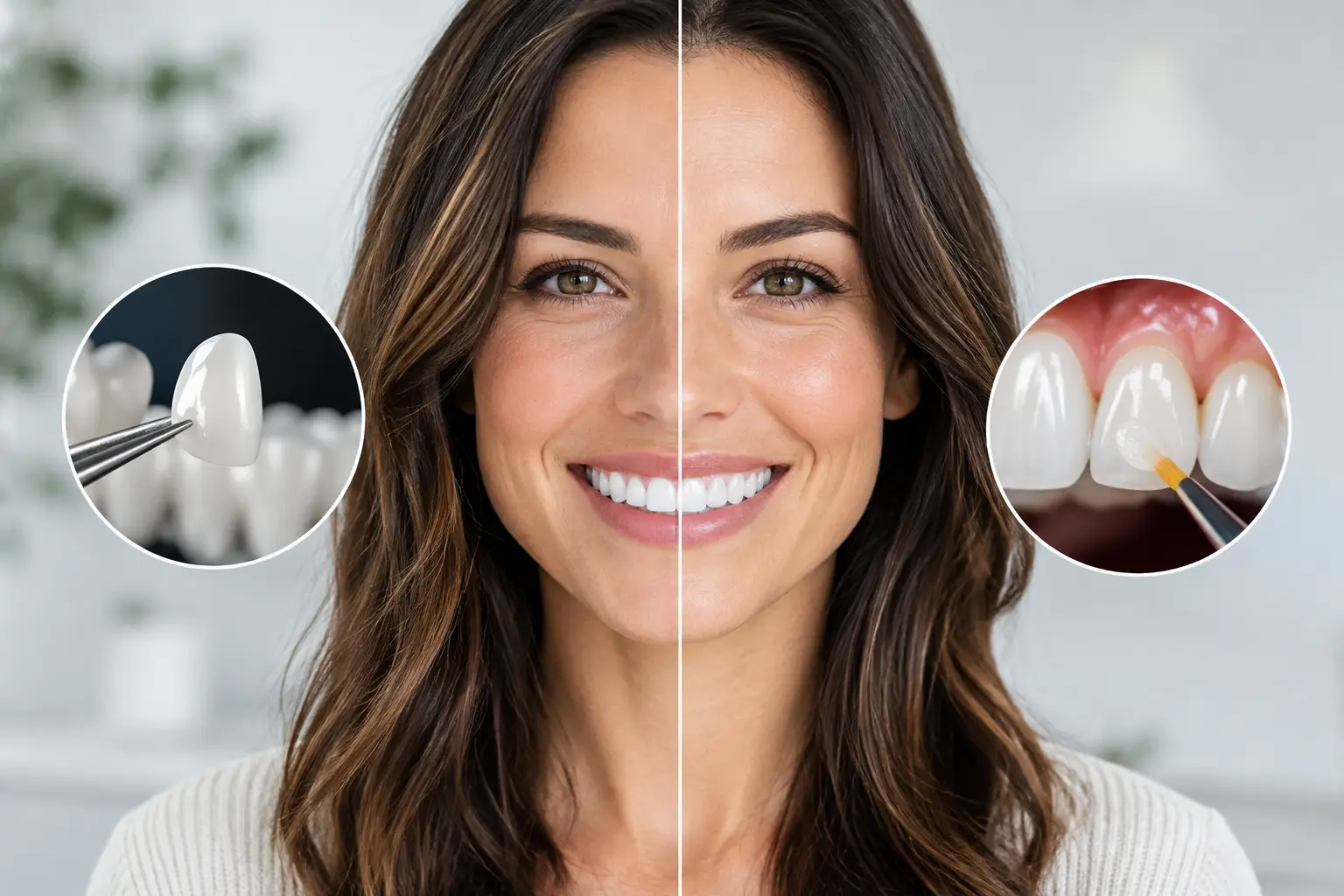
A small chip on a front tooth can make you notice your smile in every photo, meeting, and conversation. When patients ask about porcelain veneers vs bonding, they are usually looking for more than a cosmetic fix. They want an option that looks natural, respects their budget, and makes sense for their long-term dental health.
Both treatments can improve tooth shape, close small gaps, cover discoloration, and create a more balanced smile. The better choice depends on how many teeth you want to improve, the condition of your enamel, your bite, and how long you want the result to last.
Porcelain Veneers vs Bonding: The Main Difference
Dental bonding uses a tooth-colored composite resin that is applied directly to the tooth, shaped by your dentist, and hardened with a curing light. It is often a conservative choice for a minor chip, uneven edge, small gap, or isolated area of discoloration.
Porcelain veneers are thin, custom-made ceramic shells bonded to the front of teeth. They are designed in a dental laboratory after your dentist carefully plans the shape, shade, and proportion of your smile. Veneers are commonly chosen when several visible teeth need a more comprehensive change.
The materials behave differently. Composite resin is highly adaptable and can often be repaired in one appointment. Porcelain has a glass-like surface that reflects light beautifully and resists staining very well, but a veneer generally needs to be replaced rather than patched if it chips or breaks.
When Dental Bonding May Be the Right Choice
Bonding is often the practical starting point when the concern is small and localized. If one front tooth has a chip from an accident, or a small gap is distracting you, composite bonding may restore the tooth with minimal alteration to its natural structure.
Many patients appreciate that bonding is usually completed in a single visit. Your dentist selects a resin shade that blends with surrounding teeth, layers the material, then sculpts and polishes it to match the tooth. For busy professionals and parents, that efficiency can be a meaningful advantage.
Bonding also tends to have a lower upfront cost per tooth than porcelain veneers. That can make it a sensible option when you need a conservative cosmetic improvement now or are exploring a smile change before committing to a larger treatment plan.
There are trade-offs. Resin can absorb stains over time, especially with coffee, tea, red wine, tobacco, or deeply colored foods. It is also less durable than porcelain. Bonding may chip, wear at the edges, or lose its polish over the years, particularly for people who bite their nails, chew ice, or grind their teeth.
When Porcelain Veneers May Make More Sense
Porcelain veneers are often a strong option when a patient wants a consistent change across multiple front teeth. They can address several concerns at once, such as uneven tooth sizes, worn edges, stubborn discoloration, small gaps, or mild shape irregularities.
Because porcelain is custom crafted, it offers a high degree of control over the finished smile. The goal should not be an overly white, identical-looking set of teeth. A thoughtful veneer design considers your facial features, lip line, skin tone, bite, and the natural character of your smile.
Porcelain also holds its color exceptionally well. If your teeth are heavily stained from past medication, trauma, or natural aging and whitening alone cannot produce the change you want, veneers can provide a stable, bright result. With attentive home care and regular dental visits, veneers commonly last much longer than bonding.
The commitment is greater, however. Traditional veneers usually require removing a small amount of enamel so the restoration can sit naturally and avoid looking bulky. Once enamel is altered, the tooth will need a veneer or another restoration in the future. Veneers also require more planning, at least two visits in many cases, and a higher initial investment.
Appearance, Durability, and Maintenance
Both options can look beautiful when they are planned carefully and placed by an experienced dentist. For a single small repair, bonding can be nearly invisible. For a multi-tooth smile makeover, porcelain often provides more uniformity and a more lifelike translucency.
Durability depends partly on material and partly on habits. Bonding often needs touch-ups or replacement sooner than veneers, although its repairability is a real benefit. A chipped bonded edge can frequently be added to and polished during a routine appointment.
Porcelain is harder and more stain-resistant, but it is not indestructible. Using front teeth to open packages, biting hard objects, or clenching and grinding can damage both veneers and natural teeth. If you grind at night, a custom nightguard may help protect your investment.
Daily care is straightforward for either treatment. Brush twice a day with a nonabrasive toothpaste, floss carefully, and keep up with professional cleanings. Avoid abrasive whitening pastes that can dull composite resin or scratch polished surfaces. Whitening products will not change the color of existing bonding or porcelain, so it is best to discuss whitening plans before selecting a final shade.
Cost: Looking Beyond the Initial Price
For many families, cost is an important part of the decision. Bonding generally costs less upfront, especially when treating one or two teeth. Porcelain veneers cost more because they involve custom design, laboratory fabrication, additional appointments, and a durable ceramic material.
It helps to consider the long view rather than comparing only the first appointment. Bonding may require periodic polishing, repair, or replacement. Veneers can last longer but will eventually need replacement as well. Your dentist can explain the expected maintenance for your specific teeth and help you weigh an immediate budget against your long-term goals.
Because veneers and bonding are usually considered cosmetic treatments, dental insurance may not cover them. There can be exceptions when a restoration is needed because of damage or another dental concern, but coverage varies by plan. Asking for a clear treatment estimate before you begin can make planning easier. Flexible financing may also be available for patients who prefer to spread treatment costs over time.
Your Bite and Tooth Health Come First
Cosmetic dentistry works best when the foundation is healthy. Cavities, gum inflammation, unstable old fillings, or untreated grinding should be addressed before placing bonding or veneers. A beautiful result is more likely to last when the teeth and gums supporting it are healthy.
Your bite matters too. If your front teeth meet edge-to-edge, you have a deep bite, or your teeth are crowded, cosmetic material may be under extra pressure. In some situations, orthodontic treatment or bite adjustment may be recommended before veneers or bonding. This is not about making treatment more complicated. It is about avoiding an attractive result that chips too soon.
A conservative dentist will also consider whether whitening, orthodontics, contouring, or a simple restoration could meet your goals with less alteration to healthy tooth structure. Veneers are an excellent solution for the right situation, but they are not automatically the first solution.
What to Expect at a Cosmetic Consultation
A cosmetic consultation should feel like a conversation, not a sales pitch. Start by sharing what you notice about your smile and what you would like to change. Is it one chipped tooth? A gap that has bothered you for years? Teeth that look short, uneven, or darker than you would like?
Your dentist will examine your teeth, gums, bite, and existing dental work. Photos, digital imaging, and shade comparisons may be used to help plan a result that fits naturally with your face. You should also talk honestly about lifestyle habits, timeline, budget, and how much change you want.
At Dental Care of Plano, Dr. Banerjee and the team can help patients compare conservative cosmetic options in a comfortable, modern setting. The best plan is personal: one patient may benefit from a quick bonded repair, while another may feel that custom porcelain veneers are worth the greater investment.
A healthy, confident smile does not have to follow someone else’s idea of perfect. Bring your questions, your priorities, and even a photo that shows what you like. The right cosmetic choice is the one that protects your oral health and lets you smile comfortably for years to come.