
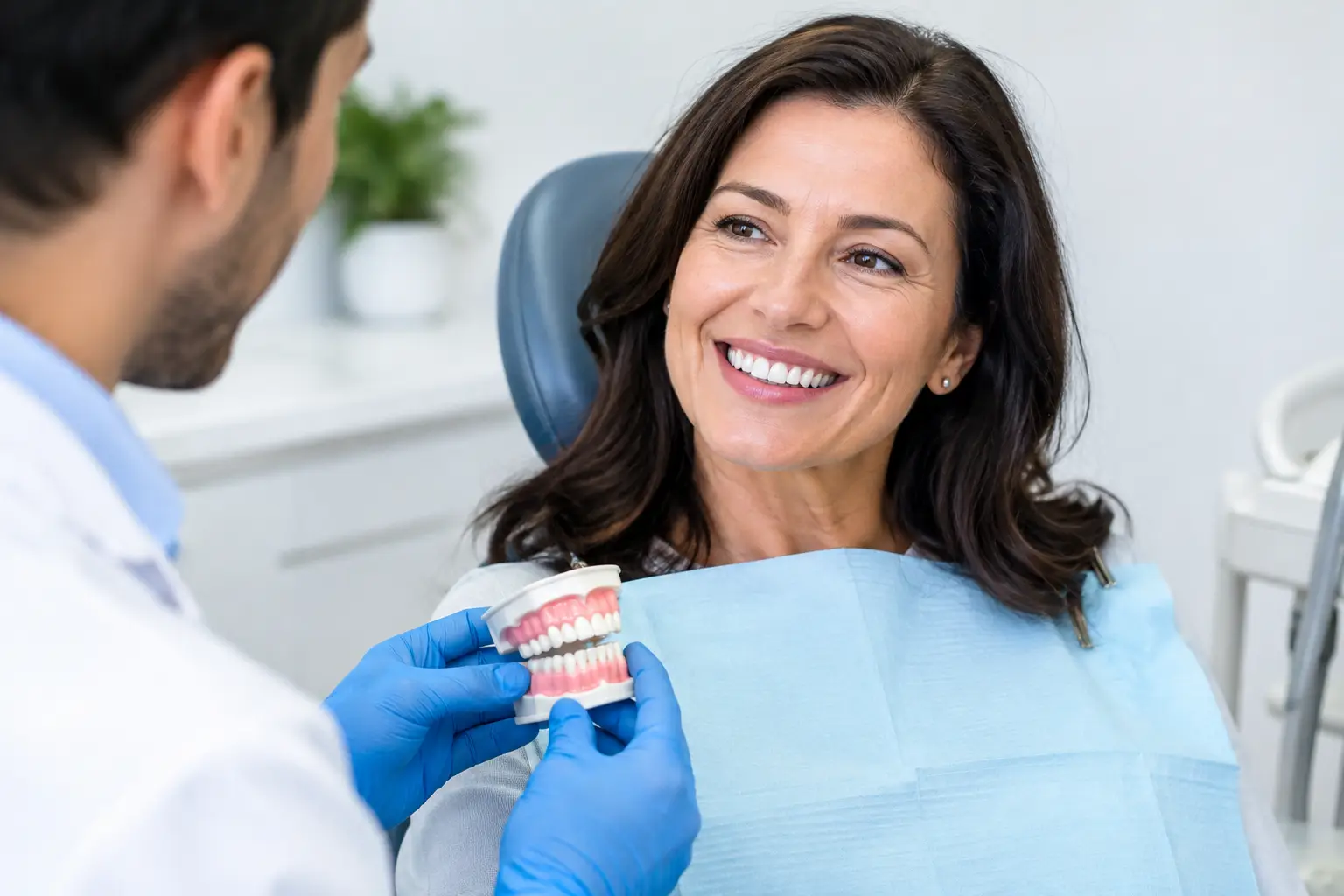
A smile can change gradually. A tooth breaks, another becomes sensitive, chewing shifts to one side, and old dental work starts to feel less reliable. For patients facing several concerns at once, full mouth rehabilitation is a personalized treatment plan designed to restore the health, comfort, function, and appearance of the entire smile.
It is not one procedure or a one-size-fits-all makeover. It is a careful process that looks at how your teeth, gums, bite, jaw, and existing restorations work together. The goal is to solve the underlying problems while creating results that feel natural and support your long-term oral health.
What Is Full Mouth Rehabilitation?
Full mouth rehabilitation, sometimes called full mouth reconstruction, combines restorative and cosmetic dental treatments to rebuild or improve multiple areas of the mouth. Treatment may involve replacing missing teeth, repairing damaged teeth, treating gum disease, correcting bite concerns, and improving the overall balance of the smile.
The right plan depends entirely on your needs. One person may need dental implants and crowns after years of tooth loss. Another may have worn-down teeth from grinding and need a combination of crowns, bite adjustment, and protective care. A patient with failing fillings, decay, and gum inflammation may benefit from treating infection and stabilizing oral health before any final restorations are placed.
At Dental Care of Plano, Dr. Banerjee and the team approach this work conservatively and thoughtfully. Rather than recommending treatment based on appearance alone, the focus is on understanding what is causing discomfort or damage and building a plan that makes sense for your health, schedule, and budget.
Signs You May Benefit From Full Mouth Rehabilitation
Many patients assume they need to wait until dental problems become severe before seeking help. In reality, early planning can often prevent a more complicated situation. A comprehensive evaluation may be appropriate if you have several damaged, missing, worn, or painful teeth.
You may also benefit if chewing is difficult, your bite feels uneven, or you avoid smiling because of the condition of your teeth. Frequent headaches, jaw soreness, cracked teeth, and repeated repairs to the same teeth can all point to bite pressure or grinding that needs to be addressed as part of a larger plan.
Full mouth rehabilitation can be especially helpful when isolated treatments no longer solve the whole problem. Replacing one broken crown may provide temporary relief, for example, but it may not correct the forces that caused the crown to fail. Looking at the full picture helps protect the work you invest in.
Your Treatment Plan Starts With a Complete Evaluation
A good rehabilitation plan should never begin with assumptions. Your first visit may include digital imaging, X-rays, photographs, a gum health assessment, a review of your medical and dental history, and an evaluation of your bite and jaw movement. Your dentist will also listen carefully to what matters most to you, whether that is eating comfortably, stopping recurring pain, replacing missing teeth, or feeling more confident in photos.
This step matters because healthy-looking teeth are not the only goal. A beautiful restoration needs a stable foundation. If gum disease, decay, infection, or bite imbalance is present, those concerns often need attention before final crowns, bridges, veneers, or implants are completed.
You should leave the planning conversation with a clear understanding of what is urgent, what can wait, and why each recommendation is being made. For busy families and working adults, phased treatment can make care more manageable. Some steps may need to happen first for health reasons, while elective cosmetic improvements can be scheduled later.
Treatments That May Be Included
A full mouth rehabilitation plan can include different services, but not every patient needs every option. Depending on your condition, treatment may involve periodontal therapy to improve gum health, fillings or root canal treatment to save compromised teeth, extractions for teeth that cannot be restored, and dental implants or bridges to replace missing teeth.
Crowns can protect weakened or heavily worn teeth, while dentures may be an effective option for patients missing many or all teeth. Orthodontic treatment or clear aligners may sometimes be considered when tooth position affects the bite or available space. Cosmetic treatments such as veneers or whitening may be included after health and function are stable.
For patients who feel anxious about extensive care, comfort options such as sedation dentistry can make longer visits feel more manageable. The treatment sequence is planned around safety, healing time, and your personal comfort level.
Why Bite and Gum Health Matter So Much
Teeth are not independent parts. They work as a system. When one tooth is missing or damaged, nearby teeth may shift, overwork, or take on pressure they were not designed to handle. Over time, this can contribute to further wear, cracks, jaw strain, and uneven chewing.
Gums provide the support system for natural teeth and implants. If gum disease is active, placing new restorations without treating it can put those results at risk. Addressing inflammation and improving daily home care are often essential parts of rehabilitation, not separate concerns.
A balanced bite also helps restorations last. Crowns, bridges, and implants are designed to withstand normal chewing forces, but clenching or an uneven bite can shorten their lifespan. Your dentist may recommend a custom nightguard after treatment if grinding is a concern.
What the Timeline Can Look Like
The timeline for full mouth rehabilitation varies widely. A patient needing a few crowns and fillings may complete treatment over several visits. A patient who needs gum therapy, extractions, implant placement, and healing time may need several months or longer.
That may sound discouraging, but a longer timeline is often a sign of careful care, not unnecessary delay. Implants need time to integrate with the bone, gums need time to heal after treatment, and temporary restorations may be used while your final smile is being created. Each phase should have a purpose.
Your dentist can help you understand what treatment will feel like day to day, including recovery expectations, dietary changes during healing, and how to care for temporary or permanent restorations. Clear communication is particularly valuable when coordinating appointments around work, school, and family responsibilities.
Understanding Cost and Phased Care
Because full mouth rehabilitation is customized, the cost can vary substantially. The number of teeth involved, whether implants or surgery are needed, the materials used, and the complexity of the bite all affect the total investment.
A trustworthy plan should be transparent. Ask for a written treatment sequence, expected costs by phase, and an explanation of what insurance may cover. PPO benefits can help with certain medically necessary restorative services, though cosmetic procedures and implant-related care may have different coverage limits. Financing options can also help patients spread the cost of treatment into manageable monthly payments.
The least expensive option is not always the best long-term value, especially if it does not address the reason teeth failed in the first place. At the same time, the most extensive plan is not automatically the right one. The best approach balances health, function, longevity, appearance, and what is realistic for you.
Caring for Your Restored Smile
Rehabilitation is an investment in daily comfort and long-term health, and ongoing care protects that investment. Brush twice daily with a soft toothbrush, clean between teeth as directed, and keep regular preventive visits. If you have implants, bridges, dentures, or a nightguard, your dental team can show you the cleaning routine and products best suited to your restoration.
Pay attention to changes after treatment. Sensitivity, a loose restoration, gum bleeding, or changes in your bite are reasons to call your dentist rather than waiting for a routine appointment. Addressing small concerns early can help prevent larger repairs later.
A damaged smile does not have to remain a source of pain, embarrassment, or daily compromise. With a thoughtful full mouth rehabilitation plan, it is possible to move forward one well-planned step at a time and regain a smile that feels comfortable, healthy, and truly your own.