
A missing tooth can change more than your smile. It may make chewing less comfortable, affect the way you speak, or leave you reluctant to smile in photos. When considering a bridge vs dental implant, the best choice depends on your oral health, the condition of nearby teeth, your timeline, and what feels manageable for your budget.
Both options can restore the appearance and function of a missing tooth. The difference is in how they are supported. A dental bridge is supported by the teeth beside the gap, while a dental implant is secured in the jawbone and supports a replacement tooth on its own. A thoughtful exam and conversation can help turn a confusing decision into a clear plan.
Bridge vs Dental Implant: The Core Difference
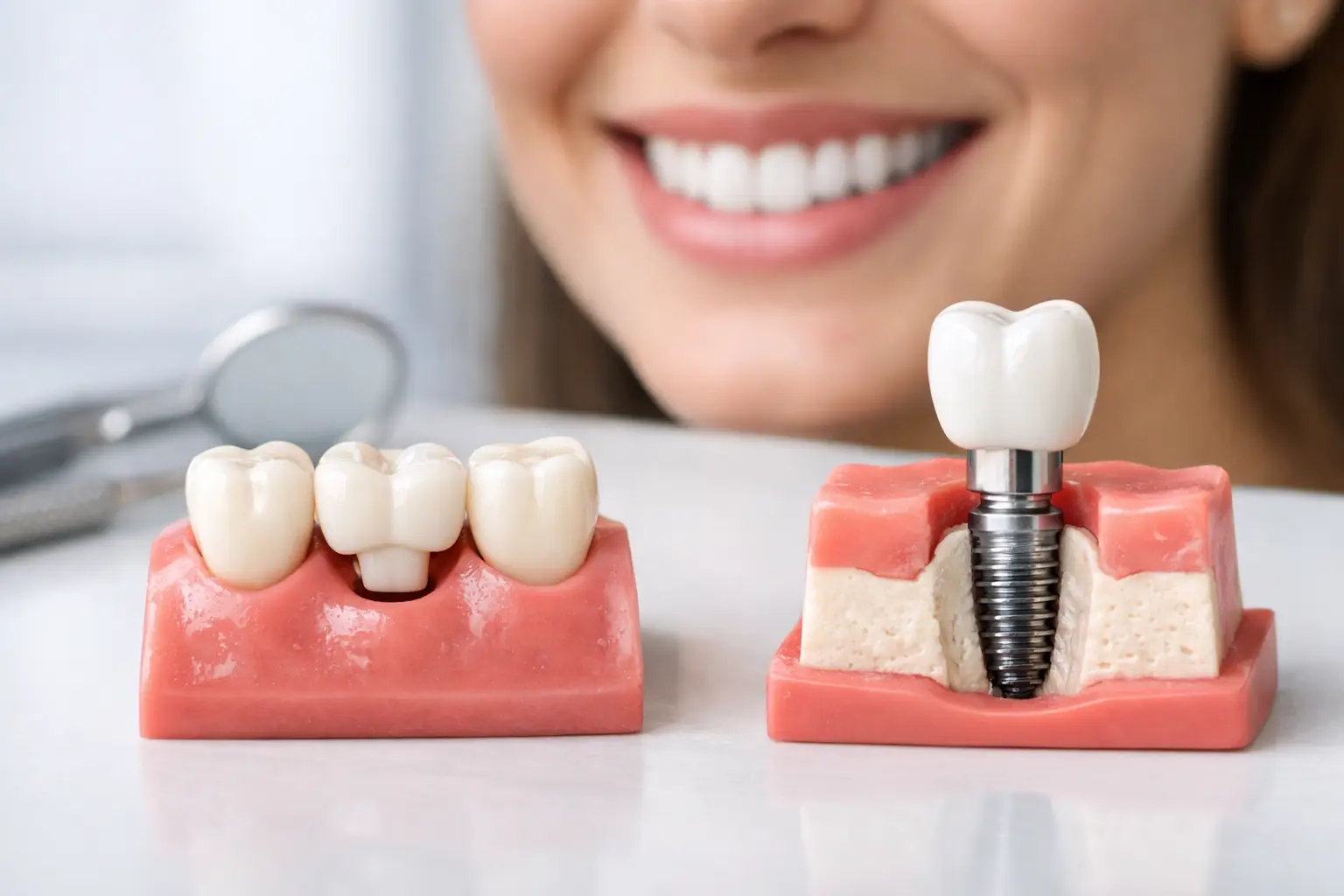
A traditional dental bridge replaces one or more missing teeth by joining a custom artificial tooth to crowns placed on the teeth next to the space. Those neighboring teeth are prepared to hold the bridge in place. Once cemented, the bridge looks natural and stays fixed, unlike a removable partial denture.
A dental implant replaces the tooth root as well as the visible tooth. A small titanium implant post is placed in the jawbone, where it gradually bonds with the bone. After healing, a connector and custom crown are attached. The result is a replacement tooth that is stable, natural-looking, and independent of the teeth around it.
Both are established restorative treatments. The right answer is not automatically the newest or most expensive option. It is the option that protects your long-term oral health while meeting your practical needs.
When a Dental Bridge May Be the Better Choice
A bridge can be an excellent solution when you want to replace a tooth without a surgical procedure. It is often completed more quickly than an implant, sometimes in just a few appointments after planning and tooth preparation. For a patient with an upcoming event, a demanding work schedule, or a strong preference to avoid surgery, that shorter path can matter.
A bridge may also make sense when the teeth on either side of the gap already need crowns because they have large fillings, cracks, decay, or significant wear. In that situation, crowning those teeth is already part of their restoration, and a bridge can address the missing tooth at the same time.
The upfront cost of a bridge is generally lower than an implant-supported crown. Insurance plans may offer coverage for some portion of a bridge, although every plan has its own limits, waiting periods, and annual maximums. For patients balancing care with a household budget, a bridge can be a practical and attractive choice.
There are trade-offs. A bridge requires reshaping the supporting teeth, even if they are otherwise healthy. It also does not replace the missing tooth root. Over time, the bone beneath the gap can shrink because it is no longer receiving the stimulation created by chewing. Bridges also need careful daily cleaning beneath the artificial tooth, often with floss threaders or specialized cleaning tools.
When a Dental Implant May Be Worth It
An implant is often recommended when the neighboring teeth are healthy and you want to leave them untouched. Because the crown is supported by the implant itself, there is no need to place crowns on adjacent teeth simply to fill the space.
Implants also help preserve jawbone in the area of the missing tooth. When a tooth root is lost, the body can gradually resorb the bone that once supported it. An implant provides stimulation within the jawbone, which can help maintain the shape of the ridge and support facial structure over time.
For many patients, the day-to-day experience of an implant feels very close to having a natural tooth. You brush and floss around it, and it does not rely on neighboring teeth for support. With consistent home care and regular dental visits, an implant can serve as a durable long-term solution.
The main consideration is time. Implant treatment usually involves healing after placement before the final crown is attached. Depending on your bone health, the location of the missing tooth, and whether an extraction or bone graft is needed, the full process can take several months. The initial investment is often higher as well, though financing options may make monthly costs more comfortable.
Your Health and Timing Matter More Than a Simple Comparison
Not every patient is immediately ready for an implant. The jawbone needs enough volume and density to support the post. If bone has been lost, a graft may be recommended before or during implant placement. Gum disease must also be treated and controlled, since healthy gums and bone are essential to lasting implant success.
Certain health conditions and habits deserve an honest discussion. Smoking can affect healing. Uncontrolled diabetes may increase risks during recovery. Teeth grinding can place heavy force on both bridges and implants, though a custom nightguard may help protect your restoration. None of these factors automatically rule out treatment, but they shape the safest plan.
The location of the missing tooth matters, too. Replacing a front tooth calls for detailed planning around appearance, gum contours, and the way your teeth meet. Replacing a back tooth may place more emphasis on chewing strength and available bone. If several teeth are missing, an implant-supported bridge or another treatment approach may provide better support than treating each space individually.
Comparing Cost Beyond the First Appointment
It is understandable to focus on the immediate price. Still, a meaningful comparison looks beyond the first procedure. A bridge can be less expensive at the start, but it may need replacement after years of normal wear. If one supporting tooth develops a problem, the entire bridge may be affected.
An implant usually has a larger initial cost because it includes surgical placement, components, and a custom crown. Yet it is designed to function independently and may reduce the need to alter healthy neighboring teeth. Its crown can also be repaired or replaced if needed without necessarily replacing the implant itself.
At Dental Care of Plano, treatment recommendations are based on your clinical needs, not a one-size-fits-all answer. Your care team can review available options, expected treatment steps, insurance benefits, and financing choices before you move forward. Clear information helps you make a decision without feeling pressured.
What Does Care Look Like After Treatment?
Both bridges and implants need daily attention. Brush twice a day with a soft toothbrush and clean between teeth every day. For a bridge, cleaning under the replacement tooth is especially important because plaque can collect near the supporting teeth and gumline. Your dentist or hygienist can show you the most effective technique for your bridge design.
An implant crown cannot get a cavity, but the gum and bone around the implant can still become inflamed if bacteria are allowed to build up. Professional cleanings and regular exams help detect early concerns before they threaten the stability of the implant. Whether you choose a bridge or implant, the restoration lasts best when it is part of a consistent preventive care routine.
How to Make a Confident Choice
The most useful question is not, “Which option is best for everyone?” It is, “Which option best protects my smile given my health, goals, budget, and schedule?” A bridge may be the sensible choice when adjacent teeth need crowns, treatment time is limited, or surgery is not preferred. An implant may be the stronger long-term choice when neighboring teeth are healthy, bone conditions are favorable, and preserving the jawbone is a priority.
You do not need to decide from an online comparison alone. A comfortable exam, digital imaging, and a conversation about your concerns can reveal the option that fits your life. Replacing a missing tooth is an investment in eating comfortably, speaking confidently, and caring for the smile you share with the people around you.