
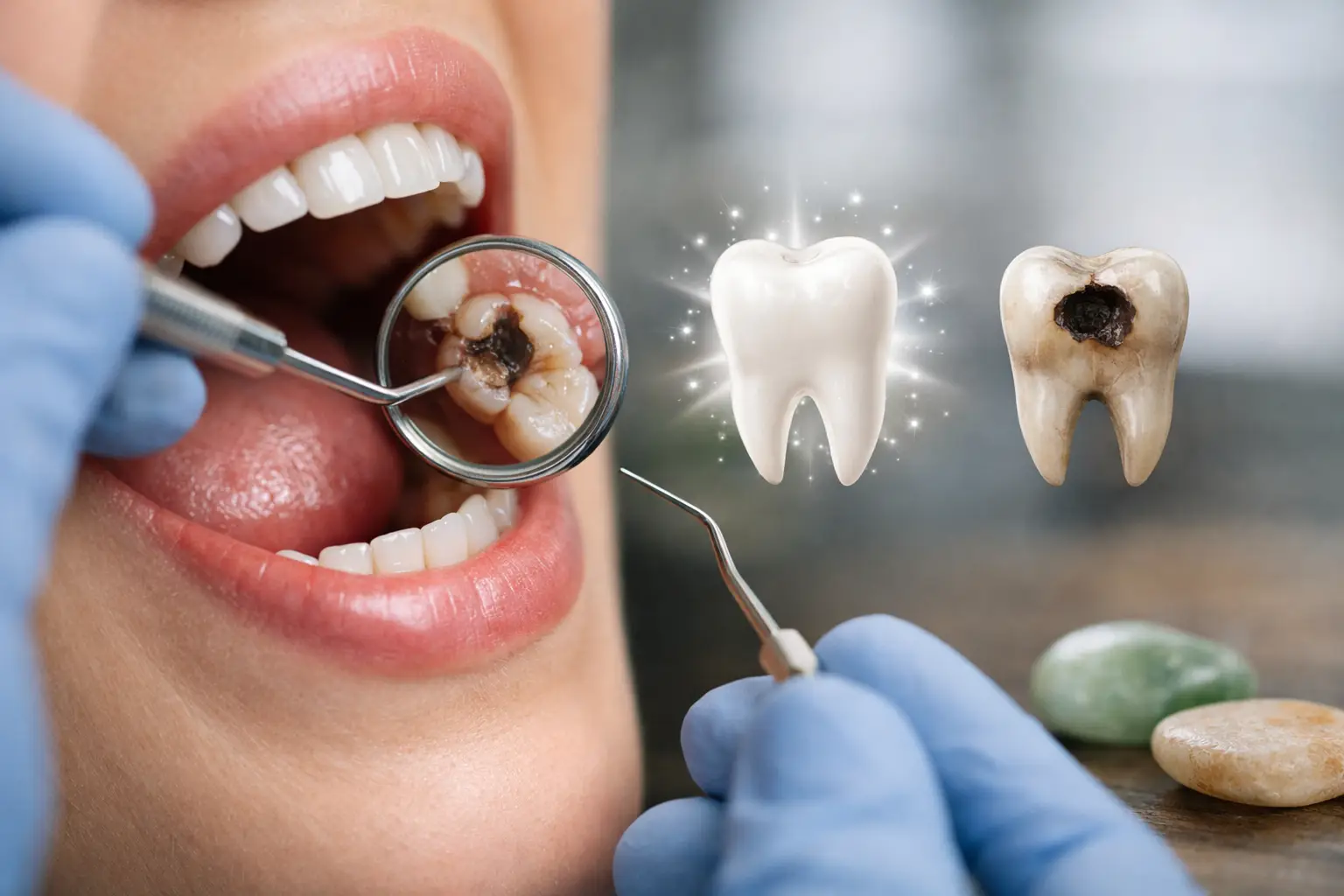
A tooth can feel completely normal while a small area of enamel is beginning to weaken. That is why the question, “can cavities heal on their own,” deserves a careful answer instead of a quick yes or no. Very early tooth damage can sometimes be stopped and strengthened. But once decay has created a true hole in the tooth, it will not grow back without dental treatment.
Knowing the difference can help you avoid both unnecessary worry and a painful, more expensive problem later. At Dental Care of Plano, we believe in conservative care: protecting healthy tooth structure whenever possible and treating decay before it becomes an emergency.
Can Cavities Heal on Their Own?
A cavity is the permanent loss of tooth structure caused by decay. Bacteria in plaque feed on sugars and starches, then produce acids that pull minerals out of enamel. In the earliest stage, this mineral loss may appear as a chalky white spot on the tooth. The enamel surface may still be intact, and this is the stage where improvement is possible.
Your saliva, fluoride, and consistent home care can help remineralize early enamel damage. Think of it as reinforcing a weakened surface before it breaks. A dentist may recommend fluoride treatment, changes to brushing and snacking habits, or closer monitoring rather than placing a filling right away.
However, a cavity that has progressed beyond early demineralization cannot heal itself. Enamel does not regenerate in the way skin can repair after a cut. Once decay has formed a pit, hole, or softened area, bacteria can continue moving deeper into the tooth. A filling removes the decay and seals the tooth so it can function comfortably again.
The Difference Between a White Spot and a Cavity
The terminology can be confusing because people often use “cavity” to describe any sign of tooth decay. Clinically, there is a meaningful difference between an early lesion and established decay.
An early lesion may be reversible when the enamel is still unbroken. It often has no pain, which is one reason routine exams and X-rays matter. A dentist can assess whether the spot is active, whether it is getting worse, and whether it can be managed without drilling.
An established cavity has a physical opening or structural breakdown. It may trap food, feel rough, show up as a dark area, or appear between teeth on an X-ray. At this point, brushing more aggressively or using a fluoride toothpaste cannot replace missing enamel. Waiting may allow the decay to reach dentin, the softer layer beneath enamel, where it can spread faster.
Signs You Should Schedule a Dental Visit Soon
Not every cavity hurts, especially at first. Still, certain symptoms deserve prompt attention. Sensitivity to cold, sweets, or biting pressure may signal decay, a cracked tooth, gum recession, or another issue that needs an exam.
Call your dentist if you notice a visible hole, a tooth that catches floss, food repeatedly getting stuck in one place, persistent bad taste, or a new dark spot. Pain that wakes you up, facial swelling, fever, or swelling near a tooth should be treated as urgent. These symptoms can indicate that decay has reached the nerve or that an infection is developing.
The trade-off in waiting is simple: a small filling is usually more comfortable, quicker, and less costly than a root canal, crown, or extraction. Early care also gives your dentist more options to preserve your natural tooth.
What Helps Early Enamel Damage Improve?
When a dentist determines that an early area of demineralization can be monitored, daily habits make a real difference. The goal is to reduce acid attacks and give enamel the minerals it needs to stay strong.
Brush twice a day for two minutes with fluoride toothpaste, especially before bed. After brushing, spit out excess toothpaste but avoid rinsing heavily with water right away. This leaves fluoride on the teeth longer. Clean between teeth every day with floss or another tool recommended by your dental team, because cavities commonly begin where a toothbrush cannot reach.
Frequent sipping and snacking can be as hard on teeth as the amount of sugar itself. A sweet coffee consumed slowly all morning, for example, exposes teeth to acid again and again. Try to have sugary foods and drinks with meals, choose water between meals, and limit acidic drinks such as soda, sports drinks, and energy drinks.
Dry mouth also increases cavity risk because saliva naturally rinses away food particles and helps neutralize acids. Certain medications, mouth breathing, dehydration, and some health conditions can contribute to dry mouth. If your mouth often feels sticky or dry, mention it at your appointment. A personalized plan may include fluoride products, saliva-supporting strategies, or more frequent preventive visits.
Why Home Remedies Cannot Fix a Hole in a Tooth
It is understandable to look for an easy fix when dental care feels intimidating or difficult to schedule. Unfortunately, oil pulling, charcoal toothpaste, clove oil, and similar home remedies do not repair a cavity. Some may temporarily mask discomfort, while abrasive products can wear down enamel or irritate gums.
Fluoride is different because it has a well-established role in strengthening early weakened enamel. Even fluoride has limits, though. It can help prevent or slow early decay, but it cannot fill a hole or remove bacteria from inside an established cavity.
Pain relief products may reduce symptoms for a short time, but they do not treat the cause. A toothache that suddenly stops is not always good news. Sometimes the nerve inside the tooth has been damaged, which can mean an infection is progressing without the same level of pain.
What Treatment May Look Like If Decay Has Advanced
A dental exam identifies how far decay has reached and what treatment is truly needed. Modern digital X-rays can reveal cavities between teeth or beneath an older filling that are not visible in a mirror. Your dentist should explain what they see, why treatment is recommended, and what may happen if you choose to wait.
For a small cavity, a tooth-colored filling is often all that is needed. If a large portion of the tooth is weakened, a crown may offer better long-term protection. When decay reaches the pulp, the soft tissue containing nerves and blood vessels, root canal treatment can save the tooth by removing infected tissue and sealing the inside.
The right option depends on the tooth, the amount of healthy structure remaining, your bite, symptoms, and your overall dental health. There is no benefit in overtreating a tooth, but there is also risk in hoping a progressed cavity will reverse on its own.
Prevention Is More Comfortable Than Repair
Regular cleanings and exams are not just about polishing teeth. They give your dental team a chance to spot changes early, assess your cavity risk, and recommend the least invasive next step. For families, this also helps children build familiar, positive dental routines before a problem develops.
If dental anxiety, work schedules, or cost concerns have caused you to postpone care, let the office know. A comfortable, judgment-free conversation can make it easier to create a plan that fits your needs. Flexible scheduling, insurance benefits, and financing options may help make timely care more manageable.
A small white spot may be a chance to strengthen and protect a tooth. A true cavity is a reason to act, not panic. Scheduling an exam when something feels different can protect your comfort, your budget, and the healthy smile you rely on every day.